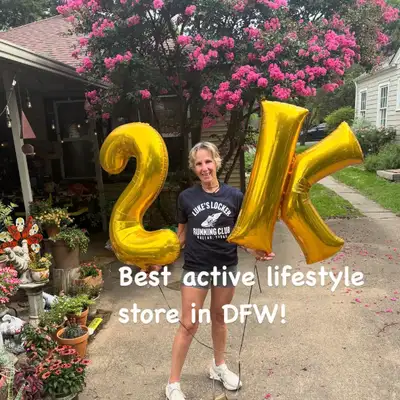

DFW Running Talk: Kerry Little - Lukes Locker
===
Chris Detzel: [00:00:00] Welcome to DFW Running Talk. I'm Chris Detzel, so let's get started.
Alright, welcome to another DFW Running Talk. I'm Chris Detzel, and today we have a super special guest. Kerry, little. Kerry, how are you? I am great. How are you? I'm ready. I'm good. You know I've seen you several times in Luke's locker. You actually work for Luke's Locker, isn't that right?
Kerry LIttle: I have been working, this is my 17th year.
It's my retired job.
Chris Detzel: Yeah. Oh, what'd you do? Retire. And then you went to Luke's, yeah.
Kerry LIttle: Isn't that crazy? I worked for the city of Richard. No way. My degree is in Parks and Recreation. So that's my love, is teaching people how to use their leisure time to the best of their advantage and to compliment their life, their work life, their spiritual life, their marriage, and then their leisure time.
I was a runner. I grew up as a swimmer. And then I started running when I moved down to Texas. I'm from Illinois, and then I started coaching for Luke's back in 19 nine, [00:01:00] and then finally retired from the city after 31 years. I'm aging myself now. That's amazing. I love that. And then the next day I, I worked at the store, so I, and then I figured out, oh my gosh I work weekends and holidays. Uhoh, whoopsie. What was I thinking? I thought you were
Chris Detzel: retired. You know what's going on. You must love it so much. So let's back up because you mentioned that you started getting to running, so congratulations on, you're retired and then working 17 years for a running store.
Yeah. So when you were running, like before you moved to Dallas and how'd you get into it?
Kerry LIttle: No, see, I'm old I Me too. I was a swimmer and then, Oh, that's right. Went to college and when I was, when I, when was right before, right at the beginning of chapter nine, so it was before women were really.
Supported in athletics. We were just, it was gym class, it was so nobody really ran when I was growing up. And then I went to [00:02:00] college. I just swam. And I remember my boyfriend at the time was a runner. We'd run around the gym and I'm like, this is really nuts. Why would you just run around in.
I don't get it. But then I did my internship for the City of Richardson down here. I moved down to Texas and I met a couple friends that were, Hey, let's go run. It's really fun. You're outside, you meet people. And this is back in the early eighties. And so I just started running and that's when women running, running became, started getting really big here.
And there were all kinds of little races and. There was not many women running. So all of a sudden I was winning races and it was like, oh my gosh, this is fun. And then it's always fun
Chris Detzel: when you win.
Kerry LIttle: You
Chris Detzel: what? I said it's always fun when you win.
Kerry LIttle: Yeah, it's great. I started getting recognition and I was always an endurance athlete.
Yeah, there was, at that time there was mostly 10 Ks, 15 Ks, [00:03:00] half marathons, that, and so I just fell into that and. Saw my niche got better and better. I've done Boston, I've done, yeah. All kinds of, yeah. So care. Let's back up, let's
Chris Detzel: back up a little bit because I think, you, you sounds like you've done a lot of different things and when you started running, you started winning some five Ks, 10 Ks, things like that. How did you, was your next step a half marathon or, what gets you interested in kind of the longer distances?
Kerry LIttle: That's what I loved. I just liked to run. To me, it was so funny.
I used to my coach was, Terry Jessup was a well-known coach in this area. And he used to laugh at me. He's if we did a biopsy of your muscles you would do a blip. And then 24 hours it would be another blip. So I was all slow twitch. All slow twitch. So I would run, a six minute pace for a 5K for a 10 k for a 15 KI would be, I, but I couldn't go.
I could, I didn't have that power, that sprint, so I didn't like the shorter distances would, I would be much [00:04:00] better running longer and longer distances and I got rewarded for that. It was fun. And then, then I started doing triathlons 'cause my background was swimming. Then ignorance is bliss.
I just did Iron Man. Why not? We were, that was back in the early eighties and yeah, we just, okay, let's go to Hawaii. All right, why not? So I qualified to do that and. The full
Chris Detzel: Ironman. The full thing? Yeah, the whole thing. The
Kerry LIttle: Corona, yeah. Did you do any
Chris Detzel: like marathons or anything before the Ironman?
Kerry LIttle: Oh yeah. Yeah. I started out doing marathons.
Chris Detzel: Okay.
Kerry LIttle: And then, yeah, then we did Ironman. Why not? It's, it was there. I was a swimmer. That's not hard. So then we would just bike and then it overtook my life a little bit. But it was fun as it does. It was a fun time.
Chris Detzel: Did you, what was your first marathon?
Do you remember? My first
Kerry LIttle: marathon was Dallas. Okay. It was the Dallas Marathon.
Chris Detzel: Wow. Tell me about it. What was it?
Kerry LIttle: It was great. It was so that was in [00:05:00] 82 I think. I dunno. Okay. But I ran a three 15, but I was not anywhere near the front because it was I don't know if it was, the women's championship or something.
It was a big race for a lot of pros to come here. So I was, I, I ran a three 15 big deal. There was a lot of people ahead of me. I didn't really realize how good that was at the time. That's
Chris Detzel: like ridiculously impressive for
Kerry LIttle: Yeah.
Chris Detzel: First marathon.
Kerry LIttle: Yeah, it was fun,
Chris Detzel: especially back then, so
Kerry LIttle: I
Chris Detzel: was just, okay.
I
Kerry LIttle: still run, so I would run with a bunch of guys and yeah, they didn't keep up with me during the race, but yeah. And so then. I did a couple more and I was fortunate enough, I always was qualifying for Boston back then. I only went once and then I started doing Ironmans.
Chris Detzel: Okay.
Kerry LIttle: Now I took my left hand turn there.
Chris Detzel: We'll talk about the Ironmans in a minute because I'm intrigued. I think that's pretty amazing. When you went to Boston, [00:06:00] do you remember like your best? Yeah. Tell me a little about that. Like you, were you excited about it? I afraid? Did you know that it was a big thing or what?
Kerry LIttle: We had a core group from Dallas that went there and it was, I did a 3 0 7.
I think it was just overwhelming. It was just so cool. 'cause Boston is Boston and. You have to qualify for it. So I was always intrigued by races that you had to qualify, you just couldn't get in. Yeah, so that's, it was the pinnacle. It was really amazing. But it was a very hard race. Kill you in running.
Yeah.
Chris Detzel: Especially a
Kerry LIttle: marathon. I was amazed. How beat up I was much more beat up after any marathon than Ironman's. 'cause you just, that's all you do is you just slam it on the run. I, for triathlons you're switching from sports to sports so you can relax some of the other muscles that you've beaten up prior to that.
But anyway, Boston was great. Mean
Chris Detzel: you're
Kerry LIttle: still
Chris Detzel: doing a lot. I think that as I think about, you running a 3 0 7, right [00:07:00] now, I wanna put it in perspective for me. I remember back in 2013, 14, 15, 16, 17, I didn't see a lot of, I didn't feel like in Dallas anyways there was a lot of people running under three hours.
I'm not saying there wasn't any, there was some, there was. You're right. I'm sure plenty. It didn't feel like, it was that many. It was like, I thought, wow, you're running, I'd see people running three oh ones, three oh fives and 3 0 7 and thought, dang, that's really fast. It is still fast.
It's not that it's not, something has changed because I feel like everybody, I say everybody, a lot of people are hitting that under three hours and even two fifties and two forties here in Dallas and. I kind of wonder,
Kerry LIttle: Equipment's changed. Knowledge of what to eat, when to eat, all that.
We didn't have go
Chris Detzel: exactly
Kerry LIttle: before cars,
Chris Detzel: yeah, that's right. No,
Kerry LIttle: I, we didn't have any of that and we didn't have a training program. We didn't really know how to train, we were just exactly throughout the miles. And fortunately, we had a Master's swim group, so [00:08:00] that was nailed down. Yeah, we coaches, and it was funny, Jim Montgomery was the head coach then, and he would just laugh at us triathletes.
He would just just swim for an hour, it's just you guys are nuts. But yeah, endurance was always.
Chris Detzel: Sorry. The biggest point though is, you were running like three oh sevens, and I don't even know your best yet, but you were in the eighties, like you didn't have the shoes.
Kerry LIttle: There was a strong group back then. Yeah. You really think back there was some really fast women runner too. I wasn't by any means solo out there, but my bus was. Just broke three hours in Duluth in grandma's 2 59, but I'll take it. When did you do that? That was in 88, I think.
Chris Detzel: Okay.
Wow. 88. Wow. Yeah. That's amazing.
Kerry LIttle: So that was that.
Chris Detzel: So that was your first and only
Kerry LIttle: Yeah. Breaking three. Yeah. I just could never, yeah. And it was, it's funny 'cause I [00:09:00] look back at it now 'cause I wanted to qualify for the trials and that at that time the qualified time was two 50 and when I didn't make it, I felt like I failed on that one.
Dang it. But I should have given myself a little pat in the back and just been happy with that.
Chris Detzel: It's I think, no, I'm sure. Even then, as runners we, we put a lot of. Things on ourself, like we worked a full-time job. Maybe we have families and kids, I dunno, whatever. And we're not an elite athletes in general, right?
Even as fast as you were at, 2 59 or whatever you ran, you are not an elite athlete. And nobody here in Dallas, besides two women that I maybe three, four, maybe or even close to. Elite. Or elite. And when I say elite, they're tours in two 30.
Because
They're not two twenties or two 20 fives either.
The men are at best 2 28 at the moment. And we put a lot of pressure on ourselves and I think that's fine and that probably keeps us fit, focused and, we love it. At the same time, like it's okay.
Kerry LIttle: You know what? Yeah. I this customer today, we [00:10:00] were talking about, 'cause he was older too.
He was the same age I was and he said, you know what, Kerry? Manage your expectations. Yeah. And I went, oh my God. Of course. Manage your expectations. Don't get bummed out about it. Just accept with grace what you can do. Not what you can't do. Yeah. It's very linear. You're always changing, you always will grow and fall back and grow some more.
Chris Detzel: Yeah. And I think that for me, like I'm 50 and I hit a PR in half marathon this year. It was downhill How little, but it was awesome. I'm celebrating, I, that's my pr, who cares?
Kerry LIttle: Never. You got it. Nobody can take that away from you
Chris Detzel: and nobody can take that away.
And look, there's always gonna be somebody faster.
Kerry LIttle: Exactly, but
Chris Detzel: What you accomplished, sleep and I know that there was a lot of really good runners in the eighties especially in DFW. I've heard about 'em from others and, things like that. And so it's where the boom started, right?
Like I talked to, what's that dude's name in Salina now he runs with Plano. But anyways, he was, boom started back [00:11:00] then. He was at over at TI and they had a team that they would do racing and stuff like that, so Ronnie was digging is to Marino? No, I see his face. What can I think of it?
I don't feel bad. Is he Jim Dietz, 65? Yeah, he's six. So he was telling me all about it. I had him on the podcast. So I wanna go into, a kind of, after your marathons, you said you started doing, all, the Ironmans and stuff like that. How'd you get into that?
What was the
Kerry LIttle: My, my ex was injured at the time, so he started doing triathlons and I thought what the heck, I can do this too. I might as well join him. Were you faster than
Chris Detzel: he was in running? Sorry, were you faster than he was? Were you faster than he was? Oh no, he was running
Kerry LIttle: through thirties.
Yeah.
Chris Detzel: Oh, wow. Geez.
Kerry LIttle: Yeah so then we just fell in with a group that did a bunch of triathlons, so that's what we morphed into. But running is just, it's a pure sport. I don't have to worry about getting a flat or getting in the pool or, is it raining or lightning or I [00:12:00] just go and run.
So that's what I've fallen back on forever.
Chris Detzel: Which Ironmans did you do? Like, how many have you
Kerry LIttle: done? Kona. Kona. Okay.
Chris Detzel: Only Kona, or you did, oh, I thought you had to qualify for that. Okay. Yep.
Kerry LIttle: But at that time we only had to do, there were certain races and the most was just a half.
Chris Detzel: Got it. Got it.
Kerry LIttle: So
Chris Detzel: did you have to place did you place Yeah.
Either win
Kerry LIttle: your age group, win your age group, or raw? I won overall one race, but then I just ran my, won my age groups in the other, and how'd it go? It was great. I loved Hawaii. I never wanted to do any other Ironman anywhere else. You're just really tired and you're just slamming it out on the bike.
The bike was always my weeks for it, and I would just look over and see the ocean and go, you know what, in a couple hours I'm gonna be on vacation. So it isn't so bad. Just, I love that. Put your mind at the next.
Wait,
Chris Detzel: it's a pinnacle. How did you think about [00:13:00] nutrition and all of that kind of stuff during stuff?
Kerry LIttle: See, like I said back then, especially during in Kona they had peanut butter and jelly sandwiches and, defi coke. They didn't have goo.
Chris Detzel: Yeah.
Kerry LIttle: And Gatorade of course, but you just had to figure out.
And grandma's cookies. I loved grandma's cookies. It's all sugar.
Chris Detzel: On purpose. Sugar, that's all you need. It's a goo, basically.
Kerry LIttle: Yep, that's right. I actually, I remember people experimenting with raw potatoes on the bike. Just, weird stuff we, 'cause we didn't have goo
Chris Detzel: raw potatoes.
You didn't have any. I could eat mashed potatoes, but trying to chew on a rock potato be rough. I
Kerry LIttle: guess it was easier to carry. I don't know.
Chris Detzel: Yeah,
Kerry LIttle: if we tried anything.
Chris Detzel: So you just kinda, would they have like little eight stations there or something, or? Oh, yeah.
Kerry LIttle: It's the same. You have an eight station every five miles on the bike and every mile on a run.
Okay. And they would have it set up just. I'm sure just as they do now, you have water and Gatorade and then you had, peanut butter and jelly sandwiches and I can't remember what [00:14:00] else they would have. Defi coke, stuff like that. Yeah. And you knew what to pick up when, and of course, you could have your own.
Stack there, your own prepared food, but you could have it placed. But those are for the elites, not for us. Common
Chris Detzel: people. Yeah, exactly. Did you start I didn't ask, did you start running like at twenties or thirties? What was the Yeah. When
Kerry LIttle: I moved down here, I didn't, I wasn't a runner until I moved down here.
So when I was in my early twenties, yeah.
Chris Detzel: Okay. But just not in college. Did you swim in high school and college or anything like that? Yeah.
Kerry LIttle: Yeah. I swam, I didn't swim for, again, it wasn't a, there wasn't any women's swims team. We were like a AAU at that time. But I came from a very competitive community in Illinois and so I was always the bridesmaid.
I was never anybody special. I was always chasing it. There was always somebody faster than me, which probably made me go faster, but.
Chris Detzel: I wasn't reward. I feel like you have a lot of ability, I think it's crazy that, there's other women running under [00:15:00] three sevens and, under three hours and things like that.
Especially,
Kerry LIttle: I didn't know any better.
Chris Detzel: Yeah,
Kerry LIttle: I just, and I ran with a fast bunch, so they kept me going.
Chris Detzel: So you did the the Iron Man and loved it. What was after that? What'd you and how old were you when you, or it was the age when you did that one?
Kerry LIttle: I finished up when, late twenties, early eighties.
Okay.
Then I had kids and my body just went, you know what? We've been there, done that. Let's just concentrate on raising with children and working. And so I gave up competition. Okay. It just wasn't fun for me anymore. And like you said, that it wasn't my job. Yeah. And that kind of got me burned out with training so much all the time.
It was just, I'm not getting paid for this. I went parole for a couple months and I thought. No way. I'm not doing this because when you go pro, you're all alone out there. You're not with a big crowd of people and I wasn't ever gonna achieve that level, so I wanted it to be fun. I didn't [00:16:00] want it to be a job.
Yeah. Anyway, so yeah, I had kids and then my body just kinda gave up on me a little bit. How many kids do you have? I have two boys in their thirties now. Yep. They're all grown. That's awesome.
Chris Detzel: Do they do any running or anything?
Kerry LIttle: They're both athletic. Running is not their passion. Know they play basketball and golf and they just dip into being
Chris Detzel: athletic.
Yeah. I just tell people like, if you don't go run, it's fine. Just go do something, be active, move. Exactly. That's
Kerry LIttle: what
Chris Detzel: exactly,
Kerry LIttle: that's, people come into the store all the time and you could just see, I'm not a runner. That's one of the first things they state.
I'm not a runner. Okay. Do you say? Yeah, it's okay.
Chris Detzel: That's fine. Great. Welcome in. Yeah, welcome in. We got some shoes just for you. So you quit running because you had kids. Did you ever get back into it? Or what was that like?
Kerry LIttle: So then I, I wanted to be involved in the running community and that's when I started coaching for Luke, and [00:17:00] then I just.
I fell into that. Either I was running with them in the training program as a coach, or I eventually Dun and I would run the training program for all the stores. And so we would write the schedules and, write the synopsis of what we were doing that day and or that week and why, and all the terms and all that, all the disciplines for each one of their paces.
So that took a lot of time. I was still involved, but I was no longer running with them. I was just doing my own thing and then helping them, but I wasn't competing anymore. I would do tur to trot and yeah, have stuff like that. But just for fun.
Chris Detzel: You're not looking to do PR or anything like that.
Kerry LIttle: No, I'm not chasing that dream anymore.
Chris Detzel: There could always be PRS for your age, that's how I'm starting to see it. It's I just PR for 50, I'm trying to hit my age group if possible. You know what I mean? I don't think I'm gonna be like a 30-year-old or whatever anymore, and so [00:18:00] even though I wanna try it, I'm gonna be some 30-year-old. Exactly.
Kerry LIttle: I'm just always I'm running, going. Is there. What am I doing? Yeah.
Chris Detzel: It's funny because there's these Latinos, Paco and Jose and JR. And these guys that run in Dallas. And Jose's not my age, but like Paco and JR.
And some other guys. And we'll go to the Plano Pacers and do their little races that they do. And. Since they're my age, I'm always getting third or fourth place in my age group. And I'm like, guys, just don't show up. It's not really cool. So I'm like, every time I, they long the
Kerry LIttle: love.
Dang
Chris Detzel: it, I'm fast, but I'm not fast enough. To those guys, I run with them on Sundays, and hang out. 'cause they'll run 10 minute miles and things. They get up there and they're running six minute miles still at the age of 53, 52, and I'm like, where's this
Kerry LIttle: coming from?
Yeah. Dang it. That's what started me on my running streak. So I just run every day. I don't
Chris Detzel: What's your streak?
Kerry LIttle: So in two weeks it'll be six years every day. Holy
Chris Detzel: cow. Wow. How much do you run? [00:19:00] What's the
Kerry LIttle: All you have to do is a mile. Yeah. But I'm a little overachiever there, so right now I'm running.
30 miles a week for some weird thing. I know, right? Everybody laughs. They're just like, whatcha nuts?
Chris Detzel: I'm hitting 30 to five to 40 miles a week and I'm not hitting every day. I just take a couple days off, because, but yeah, I love it. Yeah, I like taking days off.
I've got Dallas half coming up and I took today off, which was an extra day. I'll go run tomorrow on the next day, I'm now tapering, I like the tapers
Kerry LIttle: so well. Exactly. See, but I'm not chasing any speed. If I was doing that, I would take days off and do tempos or fart legs or but now it's just more a meditation.
I just get up in the morning, go out, figure out what I'm gonna. Do or say or meet that day and what my obligations are or how I messed up yesterday or whatever. It is a meditation for me.
Chris Detzel: I think. I think medi running's a great meditation. It is for me as well. At times, [00:20:00] whenever I'm running, I'll start getting my most innovative thoughts going around.
Oh, I can go do this at work, or, oh, I could do this thing on the podcast. I'm gonna get these four people and I'm gonna go do this thing, blah, blah, blah. And then I come back and I'm like, yeah, I'm too tired. Sometimes I'll do it, but, and you forget it. But but it is, it's like it gets my juices flowing for the day and know, I, if I don't run for a few days, I'm a little bit, antsy, and so know that why ain't gonna watch.
I don't wanna get injured. Geez. If I get injured, then what the hell am I gonna do?
Kerry LIttle: I know we all struggle with that. I think all runners become walkers, which isn't a bad thing, but there's people coming in all the time at the store saying, I can't run anymore. And you could just see they're just, their whole body just sags and I'm like.
You can still move. It's great. Yeah, just walk fast. It's okay.
Chris Detzel: Yeah. You're older now and it's just life. That's how, what life does. Something I wanna ask you about is so my wife she hit. 40, she's 51 now. But when she hit 45, 46, her body started changing in a big way.
And then, and do you see that as a big [00:21:00] thing for older women, going through menopause and all of that kinda stuff? I assume it seems to be a big factor for her. She's hit 13 Boston in a row. She now wants to do more. Oh my god. Way more strength work. Rather than doing all this running, she's still running Boston, but only now one, one marathon a year.
But now she's in the weight room. She's hardcore doing these things because she's as I get older, look, our body breaks down Chris, and you need to do this too. But, lifting weights and doing just way more of that kind of stuff. I just wanna get your reaction to that. Oh,
Kerry LIttle: absolutely.
It's an evolution. Everything changes. You get injured or you. You're tapping into your body more. You're more aware of what you can do and what you can't do or how far you can push because that's experience. She's been running a long time, so she knows what's, or she is massaging what works and what doesn't work for her, and it's all individual.
That's what she'll cool about this sport is there's no patent. Here's what you do. This is runner's world, okay, this article, okay, I need to do this, and this. It doesn't work for everyone, so it's a journey and it's really cool. Find [00:22:00] out what your capabilities are and what works and what doesn't, and tweak this and see that person and get that adjustment or, and then share it just like shoes or nutrition or anything.
That's why there's such a wide variety. That's why challenge when somebody comes into the store is I gotta figure out what their needs are, what their wants are, what their goals are, and what injuries or what mechanical issues they've been going through. Talk them through that so they're more self-aware so they can help themselves, not have somebody tell them.
And that's what's so neat about running, is it's all self-knowledge and move on and figure it out.
Chris Detzel: The one thing I love about Luke's, you just spew out a bunch of knowledge there. So I'm gonna just say this is because I think it's so awesome, is that. I now can go into Luke's and, talk to some people and they're pretty knowledgeable most of the time.
Most people there have either been running for a while, but more specifically, I [00:23:00] went in there one day and see Duncan knows a lot about me. We've just had conversations, not necessarily about shoes, but just about just different things. He knows though, that I don't like the plates or whatever, that my Achilles starts to hurt. So he knows that I don't use those. And he knows that, for a long time I used the new Balance revel three and four or whatever. So I came in, it's funny because I was talking to this guy. He's fairly new. He is a really great runner. But, ducking comes by and he's kinda listening. He goes, why don't you give him the asics, and I bet he's gonna that the new, they're not new, they're not that new. But the, a new asics that are very nova
Kerry LIttle: blasts.
Chris Detzel: No. The the one that are really soft, there's two different types, but the one's Plated one's not.
Oh, Sonic
Kerry LIttle: Blasts and the mega blasts. No. Not the plate,
Chris Detzel: not the plated ones. Just sec, I'm gonna get 'em because, okay, because I gotta tell you this, I gotta finish a story. This at 80 zero, these right here, right? The. So
Kerry LIttle: Adidas, I'm sorry, I thought you said Adidas.
Chris Detzel: My bad. Did I say something else?
Adidas, I thought
Kerry LIttle: you said Asic,
Chris Detzel: but that's alright. I did say [00:24:00] Asics, Mike, completely bad. Yeah, Adidas. Okay. The Adidas. Anyways, he just handed those to me and I wore 'em and now they're my favorite shoes because he knew the point was. He knew exactly what I wanted and needed. He's been doing this for so long.
It's kinda like you, I know he's all that knowledge. That's not Tim, but a lot of you, same. So I love that about Luke's. So anyways, and you guys have a lot of, has been there, how would you not know about what's going on? You've seen a lot of change in the shoe market and the stuff we wear and things like, oh, it's changing
Kerry LIttle: way too fast too.
And it's like splitting hairs now. 'cause there's what I just referenced in Asics is there's the Nova Blasts and then there's the Super Blasts. Now there's the mega blasts and there's a Sonic Blasts, and it's just oh my gosh, how many, what is all this stuff? They're always trying to better themselves and the technology is, and again, that, I think that's why these times are just dropping incredibly is the equipment is getting so much better. Training knowledge and all that is unbelievable in the components that we can get in. [00:25:00] The physical therapist and all that, but the equipment is crazy. It's just getting so much better. For the common man. Yeah. I think forever, as long as you don't get hurt and overuse it, because some of those plates are very, we went from barefoot.
What was that? That was what, 10 years ago or so? And then all of a sudden, boom. Now we're in these super cushy plus shoes and. It takes a while to cycle through 'em, but you'll see what injuries will start cropping up. Yeah. And then that's how we all can gain knowledge. Okay. If you have a bad Achilles, then you probably shouldn't be going in the shoe or, that's
Chris Detzel: right.
Kerry LIttle: Forget what the TV says that, oh, we need a carbon plated shoe and to go fast. Okay. You're the machine. Not, this is a piece of equipment.
Chris Detzel: Janet, I love the carbon plate. I just, my Achilles doesn't, and so no. It's I'm not gonna run in 'em. Once I start stopped running in 'em, over time it stopped hurting.
So that tells me. So there
you go.
So I don't even touch 'em [00:26:00] anymore. I want to, and I'm somewhat tempted, but I'm like, you know what, it's not really worth it because then I'm out for three months. But so they do, they feel good. They do help. I don't, I'm not saying they don't, because it's obvious, that they do.
But look, you can get some really nice light shoes and, get out there. What do you, what are you most surprised about over the last two or three years when you kinda look at all the changes in technology and things? It had to I dunno if it took you by surprise. I remember Nike came out with their carbon plate, first ones to come out and then everybody was doing it.
At first it, people thought it was cheating and stuff and everybody just adopt and say, nah, this is good,
Kerry LIttle: now everybody, yeah, everybody cheats. Just like in triathlon when they started, cheats, when they started using wetsuits, as a swimmer, I thought that's cheating.
Why are you wearing a wetsuit? Because that's gonna give you the advantage to float. But, then they started going if the temperature of the waters this degree, then you can use it or drafting. That's another, that's a huge advantage. If you know how to draft off to somebody, you get away [00:27:00] with it.
So then they started allowing that too. So what's cheating? I don't know. It's fluid, but Exactly. We can just justify anything as humans.
Chris Detzel: We do.
Kerry LIttle: But if it makes. Makes you I, qualifying for something or making money off of it. Okay, then let's draw the line. Let's figure it out.
But for people in their leisure sport, whatever makes 'em happy, whatever makes them more efficient, whatever floats their boat, why not? Why not share that with the technology with. Common folks. Exactly.
Chris Detzel: And they get, we all buy it.
Kerry LIttle: Yeah.
Chris Detzel: So
Kerry LIttle: it's all market driven. Yeah. Whatever, if you can afford a $300 pair of shoes, okay.
That's another thing. Triathlons. You can afford a really nice bike. Is that cheating or that it is it was always when I was doing it a elitist sport because it's expensive. Yeah. And even running has gotten expensive now too. Agreed. [00:28:00] Yeah. It's scary. Excuse
Chris Detzel: went from you could probably get 'em for $110, once now that they're like, you could find 'em for $400.
I'm like, yeah, geez. I've seen myself spend 2, 7 70 or two 80. I'm like, yeah, it's fine. Yep.
That's just life. It's ridiculous.
But that's how it's gone. It's just, and there's money to be made, and run, for these running stores, obviously, Luke's and others that are, do, so I think that's, it's good though.
So in
Kerry LIttle: a way that's sad because it is segmenting a population. But back to your point, it is crazy how organic the running community has gotten since the pandemic. There's little pods of incredible community support. And. It's amazing to me how big these running groups have gotten overnight.
And then the ethnic goose, Latinos and the blacks. I mean it was just, it's incredibly, it's so cool. I really love that. 'cause they found their group, their jive, and they're getting. In it. They're getting [00:29:00] outside, they're getting away from computers, they're meeting people face to face. It's just really cool.
I love that.
Chris Detzel: Yeah. I talked to Theo from running it up and somebody else from running it up and so he started this black and brown community almost a year ago, and it's ridiculous how many people are showing up. I talk about this on the podcast sometimes is. Literally two or 300 people are showing up.
And then when you look at their Instagram, they're like par, like on the weekdays they only do two or three miles, but they're active, they're getting out there running. And then on Saturdays they might do three or four miles, but then some people are doing them halves and fulls and things like that.
They're bringing 'em along. And I think it's really great, that because, before that there wasn't really much, no black and brown people, running. You'll see some, but. Not as a community, what I said is when you think about it, like DRC and all these other running groups, they're, there's full of, people that run.
But you would maybe see one or two black or brown person. Oh, exactly. Because it's, so it's like he found [00:30:00] a niche and I love it too. I was like, I have to have you on. And you came on and it was so interesting and intriguing, and they're doing way more than just the running stuff.
They're bringing in. Doctors and cardiologists and all these things, that is pretty cool.
Kerry LIttle: Yeah. And they're doing charity work and it's just, it's really cool. And you just, you never know who you're gonna meet and connect with. And there you go. It's the new, you've get to see
Chris Detzel: a lot of people, maybe you don't, people see people in their groups.
I guess, you just see people individually that come in to get shoes and stuff, so that's interesting, isn't it? Like no matter what you're seeing just that one person or two that come in just to get that Nobody goes in there as a group to buy shoes. I'm sure. Or do they
Kerry LIttle: Oh yeah.
We've had, actually, we had the a run 2 1 4 2 1 4.
Chris Detzel: Yeah.
Kerry LIttle: Deals group. They just were at the store last week. We'll have groups come in and do little clinics with them or open the store early and have fittings for them. Oh yeah, for sure. We support DRC we, we support Pegasus. Yeah. So
Chris Detzel: Yeah, you guys support all of them, I know there's some discounts too [00:31:00] sometimes, depending on if you're part of the group. So I always use it.
Kerry LIttle: Good. Yeah, after the pandemic, we just decided to forgo the training program that we had. 'cause we used to have our training programs and just support. The community. 'cause that's what Luke's does.
So why fight it? Just let's support 'em and let us work at the store because those Saturday mornings were long. And we had to work after that. As far as community, you can't beat Luke's. I mean it's they started a bunch of races. They've supported Turkey Trot, Katy Trail, used to do the Arboreta run and in Fort Worth, they're big component in co town.
The family has. Has supported, actually Don was one of the instant, the instigators or the founding fathers of the Katy Trail way back when it was being formed. Wow. He was one of the initiators of that. It's incredible. This family has just has their tentacles all over the running community in Dallas [00:32:00] and Fort Worth.
And the other stores, we used to have stores in Austin and Houston, but they walk the walk and Yeah, they just don't, they just, they're just not, they're involved. It's really cool. And that's why I joined Luke's Lockers because of that community support and endorsement.
Chris Detzel: They're just, the folks I've met, including yourself, are just really good people and it's funny because I remember when, I dunno if it was before the pandemic or whatever, I think Luke's was having a hard time with some stores and things. I thought, man, that stinks. Luke's is going out of business probably or whatever. But I dunno if it's four or five years ago, however long it was not all that long ago that all of a sudden it's come back.
Like now I go into the Lukes Soft Mockingbird, I think this is the one you work at. I mean there's only a two or three now, right? There's
Kerry LIttle: only Fort Worth and us. We are the, oh,
Chris Detzel: there's two. Yeah.
Kerry LIttle: Some mothership. Yep.
Chris Detzel: Yeah. So now when you go in there though, like I remember you would see much stuff there.
Now it's like full of stuff. You can't even get, it's really great. Every time I go there too, like there's tons of people [00:33:00] there. You and I think that's a good problem. Yeah. I'd love it. It's not just
Kerry LIttle: your regular running store, because it's not just a running store. Yes. It's, you got that vibe when you walk in.
I've never been in another store like ours. Even any retail store. We're there to help you, we're there to chitchat people, hang out, carry a wide variety of products and for the first time people walk in and go, oh my gosh this place is. You got a lot of stuff there and you have a great selection.
To me it's yeah, and the vendors all support us. We're one of the few specialty stores that really, and that happened because of Don and Sharon. Way back when they formed a relationship with Tiger Sports and Blue Ribbon Sports, which is Nike and Asics, and from there it's just grown and.
People come to us. Lululemon started with us. Now we have more RI than I think the RI store. We have a lot of specialty or boutique-ish type apparel. We carry shoes that nobody else does [00:34:00] because these vendors recognize our knowledge and our. Impact on the community and come to us.
Chris Detzel: It's the ex to me, it's the ex.
I, I love all of that and I think that's very important for the vibe and for the running community, but also the knowledge that you guys have. The expertise, I think is, one of the most important things you can do because, you could try on a shoot anytime and know nothing about it.
I can go to, I don't know, some. Off the wall store or some, whatever, and not get help at all. Just say, oh, do you wanna try this shoe? Yeah. Okay, good. And that's it. Yeah. If I tell you that, look, I'm having problems with my Achilles and this thing is happening and whatever, and you're gonna ask me more smart questions, and then you're gonna say you need to try this.
This shoe probably could really help. Why don't you try it out and quick? And so I guess, like I told Duncan this, it's all about the expertise. Certainly all the other stuff you mentioned is key, but expertise to me is. Pretty important.
Kerry LIttle: I think what's really cool is Matt and the Lucas's realize it's.
It's more about listening to the customer. Yeah. And then the [00:35:00] conversation begins instead of you coming in, like people will start the conversation, will you tell me what the best shoe is for me? No. Let's lemme figure out what you are like. Exactly. Let me figure out what's been going on in your path or where you're going.
So that's the key is listening to the customer and drawing out those questions and figuring out what the right fit is instead of. Telling them this is a shoe you need, don't go anywhere else. Because again, you evolve, you change, you have injuries, you grow, you age, all that. So it's a long-term relationship that we like to try to develop and listen and look.
I, I think shoes change too.
Chris Detzel: Like one day the, oh yeah, one day the Revel, threes and fours are awesome. And then the fives are just. They're fine, but they're changed. And I'm like, what happened here? Exactly. So I moved to Adidas. I still do the revels, but the point is like that's why you have to ask those questions.
Because it's and it's not
Kerry LIttle: an exact science. We allow you to try 'em. And if they don't work, bring 'em back. Let's try it again.
Chris Detzel: [00:36:00] Yeah, that's what that's happened to me once, I was like, I just can't run in these shoes, these particular types of shoes. I'm, I gotta send 'em back. I don't wanna spend $200 on a pair of shoes and I can't run in 'em.
Yeah. Yeah, I appreciate that about you guys. Is there anything about you that we missed during kind of this conversation? I'm sure we missed a ton that you wished, Hey, I wish we would've talked about this thing,
Kerry LIttle: I think I do wanna just stress about my running street.
Anybody can do it and I don't. It's not that it's every day, but I just want people to get outside. And breathe and move. You just feel so much better when somebody comes in the store and go, oh, it's cold or it's raining. Your skin is waterproof. Just get out there and get yourself five minutes. Just get out the door and move.
And after five minutes, I doubt very seriously. You turn around and go back inside. You'll just go, all right 30 minutes. I'm just here. Let's go. And you feel so much better. You feel if you move and you don't have to go outside, walk in the mall, just. I want people to [00:37:00] move. It's being sedentary is the fastest way to the grave, I tell you.
A hundred percent. I have to keep moving and everybody is active now. Everybody is wearing leisure shoes, so walking and running shoes have become very common. Yep. We have a ton of them and we'll navigate those. What this means or what you need, but that's where the store comes in. I love having those conversation, but I don't have to sell you a pair of shoes.
If you walk away with nothing it's okay, but I just want. To have people realize how important that time of being by yourself or being with somebody else, and movement conversations can happen. There's a lot of studies like that when you're driving in a car. If you're not facing each other, then conversations start to flow.
That's running and walking too. Yeah. Start, you reveal yourself so much better with your running partners than probably your spouse sometimes, many times. But just breathe [00:38:00] and move and I can't be in a gym. I can't, I don't like that. That's not my vibe. But even going out to the gym, there's a community in the gym and I go to the Ys and people are recognize me and we, you have your own little community there.
Just get out and move. You just feel so much better.
Chris Detzel: I agree. I think. Like I mentioned before, there's 40, 50, 60 running groups out there that and a lot of those have walking groups with them as well. Oh yeah. So go out in the community and start, just no matter
Kerry LIttle: what age.
Chris Detzel: You can be,
Kerry LIttle: yeah,
Chris Detzel: go to your Lukes, local Lukes and ask about a running group.
Is there a running group that you think can think of? And I'm sure that you can name one or two of them. Oh, there's, Pega says, oh, there's drc. Or, oh, whatever. You know what I mean? There's no, to me, there's no excuse to not get out there, and I love that you're doing that streak is there, I'm sure like,
Kerry LIttle: And then there's really, what's really cool is I wanna mention this, the Loop Dallas.
Yeah. Familiar with that. We have a big map in our store, the Loop Dallas. They have the sky's just incredible. He's connecting all these trails [00:39:00] around and his loop that he's creating is a 50 mile loop around Dallas and down to the Trinity and up and, connecting White Rock and then it'll eventually connect Richardson and Plano and all the way to Fort Worth.
Dallas has had, Dallas Fort Worth has an incredible trail system. That now you can just get out your front door and walk down it. It's, there's a Santa Fe trail that goes well. It connects to white Rock Lake, but it'll go down to Fair Park and. It splits down some of the older communities.
Once it's there, older people that probably have never exercised, get out and just walk or ride their bike with their kids or, it's just incredible the opportunities that are around this area and the weather is great. Yeah, all the time.
Chris Detzel: Most time, gets down 30, 40, whatever, it's
Kerry LIttle: pretty hot.
It's gonna be cold. But as far as the rest of the country, this is an ideal place to,
Chris Detzel: to be outside. Agreed. It's funny because [00:40:00] summertime this year a lot of people are like, summer are so hot. I get it is, I don't wanna go run necessarily two or three o'clock in the afternoon, when it's a hundred degrees or whatever.
But man, I get up at, four 30 and go run starting at five 30 or six or something and
Kerry LIttle: okay, you're nuts. No.
Chris Detzel: It's better that I'm just not an evening person generally. No, I did run those what's that lake? Bachman Lake. They have these five Ks that lend in and all them put on. And I was like I don't wanna go run half marathons. Why not go do some speed work and do the Bachman Lake free five Ks? 'cause it's a race and you can just practice like every week for four months or three months. And I was like, all so I tried that this summer. It was really awesome.
Ken and Linda put that on with some other people.
Kerry LIttle: Yeah, that's an old series that's been going on for a long, since the seventies. Long time,
Chris Detzel: from what I heard, the seventies. Crazy. Yep. Yep. The seventies. And it's still going I can't believe it,
Kerry LIttle: That's great. It's wonderful.
Chris Detzel: It's awesome.
Yeah, exactly. It just tells you that running's been going on for a long time. It's not just now as the, it's, there's a [00:41:00] boom now, but it,
Kerry LIttle: yeah, I think it started with the original Olympics,
Chris Detzel: so it's been cool. Kerry, this has been really great. I really appreciate you see, that wasn't all that bad, was it?
Kerry LIttle: No, I think we went all over the place. I don't know.
Chris Detzel: It's all right. We did, we talked about No,
Kerry LIttle: it was fine for me.
Chris Detzel: We talked about your journey and what you did in the past and what you did in the middle and what you're doing now, and we talked about shoes and all that kind of stuff, so that's really sums it up Kerry, thank you so much for coming on to DFW Running Talk.
Thank you everyone for tuning into DFW Running Talk. Please subscribe to the newsletter by going to DFW Running Talk dot substack. Com and Kerry, thanks again for coming. Really appreciate it.
Kerry LIttle: Oh, you have a lot of cool stories out there. I really appreciate you sharing them with everyone, and I appreciate folks.
Thanks for coming on. Of course.