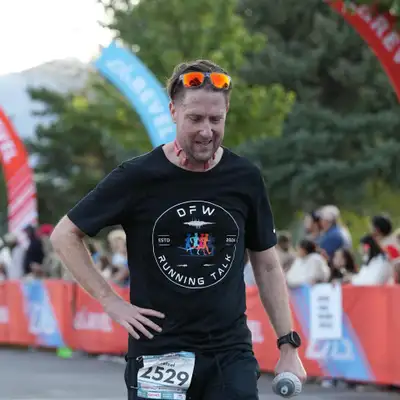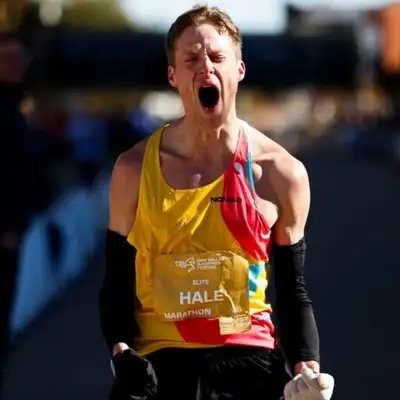
DFW Running Talk: Joe Hale
===
Chris Detzel: [00:00:00] Welcome to DFW Running Talk. I'm Chris Detzel, so let's get started.
All right, welcome to another DFW Running Talk. I'm Chris Detzel and today's special guest is Joe. Hale, Joe, how are you?
Joe Hale: Doing well, how are you doing, Chris?
Chris Detzel: Good, man. I appreciate you getting on. This is exciting.
Joe Hale: For sure.
Chris Detzel: Uh, it's funny because what I call pre-show, which is like two minutes long.
Um, we were talking a little bit about your accomplishments and what you've done, and you've actually won Dallas Marathon twice, and then you ran it this year. You didn't win it 2025, but you did pretty well. And so we'll talk about some of those, but you've had quite the journey and in running.
And so I wanna talk a little bit about kinda how you got into to running. What, where did it all start, Joe? I'm, I'm interested.
Joe Hale: Yeah. I think I'd run like maybe like a couple times with either my dad or like maybe one fun run. But my older sister, she's, I have three siblings. I'm the youngest of four.
She's eight years older than me, and she and my older brother, [00:01:00] who's three years older than me would go to. The summer track, it's Texas or taf, I don't remember what it stands for, but it's summer track. Yeah. And they would go every summer and run. My sister was a semi accomplished runner for going to a, competing for a small private school, and so I went and followed them to track practice in 2000 when I was seven years old.
I, uh, went there and I loved running. I just, I was running a lot more than kids that are seven years old even. That's cool. Even
Chris Detzel: at track practice, that's pretty
Joe Hale: obviously I had like an eight year preview into what, what genetically I likely could do. So that was a nice, nice to know that I would be good at this.
Before that, you know, you just did the typical 4-year-old soccer and then
Chris Detzel: Yeah,
Joe Hale: but really caught on to running. They have like a state meet. I think my second summer I made it to state meet in the 800 meters. I was eight years old, didn't really know what I was doing.
Chris Detzel: You just
Joe Hale: running and Yeah, just running.
I was having fun. I was running like low threes for an 8-year-old for an 800, which I think was the longest. They'd let [00:02:00] eight year olds run. But yeah, just kind of continued Summer track. Grew up in Greatvine, so grew up running with, uh, greatvine runners and Walkers. I don't know if you're familiar with them.
Um, back in the late nineties and early thousands. They're probably one of the biggest running groups in DFW. Uh, running clubs have expanded quite a bit since then to where
Chris Detzel: a
Joe Hale: lot, you know, Dallas has really, really big ones now. Yeah. But they used to have almost 500 members back then, so we'd go run with them.
Do there's mountain back bike trails around Grapevine Lake. We'd run those twice a week with them kind of during the off season or not during the summer. You know, I'd still continue to do soccer until I was nine, and then I just did running after that. I would say I wasn't that serious in that I wasn't going to, I, I didn't know what I was doing.
I was just running.
Chris Detzel: Yeah,
Joe Hale: I
Chris Detzel: think
Joe Hale: that's, that's having fun. Nine, 10 years old, having, that's what was important, right?
Chris Detzel: Yeah.
Joe Hale: Yeah.
Chris Detzel: Did, um, so as you kinda got into middle school or high school, did you, I assume you were in cross country and all that kind of [00:03:00] stuff and
Joe Hale: Yeah.
Chris Detzel: Once you start getting a little bit more focused in on
Joe Hale: Yeah.
I'd say end of my eighth grade year I kind of got focused and a lot of that has to do with hitting, puberty and growing. Yeah. I think I grew six inches in eight weeks, which was an incredible amount to grow and your stride gets a lot longer. So I went from running like, high fives to running low fives super mile Right.
Without really putting any additional training effort. And then I got the flu really badly at the end of my right before my freshman year, and I just remember. Running at road races and other things. And you know, there is Craig Lutz back then who was the name in high school running, not just locally, but nationally.
He ended up winning the Nike Cross Nationals his junior year and being, I believe, top five, uh, or top five or top 10 from sophomore year all the way to his senior year at Alden National kind of level meets. Um, yeah. So I was always getting laughed by him. There were always, a couple runners, but there weren't.
Yeah. You know, you get to be a freshman year, you know, [00:04:00] freshman year you've run for, I don't know, like, it seems like a long time then, but you know, it's only six years. And you have all these people that just stepped out on cross country course and start running and, I wasn't any really that good.
I was running my freshman year, like 20 minutes, 19 minutes, or 5K, which in the high school scene is not, you know, not that good, especially in DFW, you know, it's not that good, even if you're, yeah. You know? Yeah. Right. Um, yeah,
Chris Detzel: you got 15 miners back then, you know? Yeah. Even though, so,
Joe Hale: Yep. Craig was low 15, sometimes breaking 15.
Even that early on he was really, really fast. And so I got kind of disheartened and I'd say my love for kind of, went down and then after that, after my, just
Chris Detzel: because
Joe Hale: you're getting beat sophomore. Yeah. And I just motivation and, you know, there's,
Chris Detzel: and
it's
Joe Hale: high school, other things going on in life.
Yeah. It's high school, right?
Chris Detzel: Yeah. Yeah.
Joe Hale: But then eventually, kinda my sophomore year, gotten around a group of people who loved running, including a coach that really liked running. I didn't follow kind of a traditional path of high schools. [00:05:00] I was homeschooled, which, you know. There's pluses and minuses to that.
One of the pluses is when COVID hit and everyone had to work from home, I am extremely efficient at working from home. So that's, you know, a great benefit. But then there's also negatives that you don't have as many training partners. Right? Yeah. And you don't have that level of competition, not just on the weekends, but during the week.
Right. You know, as racing all the same as everyone was until district regionals and state. But I just didn't have that same kind of training.
Chris Detzel: Yeah, that makes
Joe Hale: sense. Partners. My dad. Yeah. My dad coached. My first couple years in high school, so I'd run with his team a little bit, but for the most part I was mostly on my own.
But I ran into that group and another coach from the area and he kind of coached us up a bunch and he really taught me a love for running and not just running for distance running, but a love for running for the entire sport. So he would be big into the sprints, the throws, right. All of it. And at the time he went to UTA back in the eighties, and at the time, UTA was a sprinting training [00:06:00] hub for the us.
John Drummond was based out of there. He was the relays coach for team USA. And so, you know, before World Championships and Olympics, all the top sprinters would come for a week or two and you know, they would be in Dallas. And so we'd go run the Luke's locker open meets at either Greenhill or TCU.
Every once in a while you'd see pies and gay pop around, or Jeremy Warner, which, you know, multiple Olympic medalists right there. Right. And there'd just be either there working out, or, a couple of them would hop in races every once in a while. It's really taught a love for the sport as a whole, not just distance running, which a lot of us get focused on just that one portion of the sport.
And from there, my love grew, but I wouldn't say I really like, I didn't have this massive jump in performance or anything. I graduated high school with very, very mediocre prs. But I knew I just wanted to run, I'd always wanted to run in college. My sister went on and ran in college. My brother did not run in college, but we ended up high school with around the same prs.
And it's just, I knew I wanted to keep running. I knew I had more [00:07:00] left in the tank. And so yeah, I decided to go to DBU at the time the men's program was just a hundred percent a walk-on team at the time, even though division two. Um, yeah, so went there and from there just had a great, great time.
Had a lot of teammates and you know, just had massive boost in performance from being able to, you know, have those people training day in, day out. Um, and that's kind of where I really started to push. The limits of mileage, which really gets into a lot of what's behind a lot of my training methodologies and really kind of pushing the limits with building that aerobic base and just continually building that throughout your life until as long as you can and just, so
Chris Detzel: when you said massive performance, what are we talking about from a 5K, like from high school of 18 or 19 minutes to 15, 14.
You know what, what did that look like?
Joe Hale: Yeah, so I graduated high school. I think my PR was around mid seventeens and that was on the track. And cross country was like high seventeens, maybe even low eighteens my senior year. So there were a lot, there were hundreds [00:08:00] of people in DFW faster than me in high school.
Chris Detzel: Sure.
Joe Hale: And then freshman year, I'd say my two miles, probably the easiest one to go off of the performance boost that went from, going through three K during a 30, 200 meters at 10 minutes. In my freshman year I was running low nines. Okay. So I think, so it's almost a minute in, it was indoor. So that's like in six months, right?
Yeah.
Chris Detzel: That's huge.
Joe Hale: Which is massive. Massive. And I even in college though, I just never really had great races. And what I ended up learning was I had this amazing ability, like on the team long runs in tempo workouts. I would be up there or near the top guys on the team who were winning our conference individually and stuff like that during those long runs and, and those longer workouts.
But then when it came to shorter workouts as I was a little bit behind, but when, especially when we're running on soft surface, so grass, which is what cross country is, I would be way, way back there. And it would just be like constantly [00:09:00] twisting ankles after the first mile. It'd be like every 20 meters.
I'm just stumbling. Um, I just don't really have much good balance on soft surface and I just, I haven't run a cross country race since call since my senior year. No trail running regionals for dinner. I have done that. I'm not good at it. But two of my old teammates right after graduating, two of my old teammates talked me.
They were trying to make it kind of semi-pro in the trail running world. And so they talked me into running a 50 K in El Paso. Oh man. They talked me into it on like a Thursday and I ran on a Saturday and I was training for five Ks. And so that was, that was the worst thesis in my life. And yeah, in a way that's.
Yeah, in a way that's, it's a benefit. 'cause as I've gravitated to the marathon, I have never experienced the level of like soreness and pain from a marathon that I experienced that day. So, or the day
Chris Detzel: that, so you did, you did a 50 K on a trail, you know, which is Yeah. A lot harder to do and, and on the road, right?
I mean, it take you longer, you go slower, you might trip or,
Joe Hale: [00:10:00] yep.
Chris Detzel: So
Joe Hale: altitude. Yeah. Yep.
Chris Detzel: Well if you wanna the desert altitude. Yeah, for sure. That'd be rough. Yeah.
Joe Hale: But definitely a memory.
Chris Detzel: Yeah. Wait, that's what, you know, at the end of the day, you know, most of us aren't professionals.
I mean, you're certainly a level or two or three above a lot of people. But still, uh, so alright, you get, go to college, you do really well. Uh, did you, but, but you find out you weren't, you didn't perform as well as you could or thought you should, you know? 'cause it was cross country, it's on soft surfaces.
Mm-hmm. And things like that. So
Joe Hale: yeah. And then also I had a lot of like sickness and one or two injuries and track, and I'd always do pretty decently at track for, you know, what I was running. Yeah, I'd go from being anywhere from the eighth to fifth guy on the team to being the top, three person on the team when it came to track season except for my freshman year.
You know, it just, you know, it wasn't quite, I knew there was more left in the tank and, um, I knew I just hadn't [00:11:00] had, my training indicated I was a way better runner than I ever was, and yeah. There's no one else I'm trying to prove this to except for myself. Right. At that point, no one knows who my name is.
I'm not even the top, you know, top guy at this one, random division two university that doesn't even have scholarships. No one was really, you know, no one knew who I was. But there's never scholarships
Chris Detzel: for DDU U is it?
Joe Hale: There no one, I believe they have 'em now, but due to Title IX at the time, right?
You have to have more women's scholarships than men's sch or equal or more across all sports. I really think Title IX should have been worded differently, but it would have destroyed football in the pre nil, uh, world, which is, there needs to be equal or more scholarships for women in that given sport to really have to bring true equality from a gender standpoint.
If you go look at the NCAA rules, you can have 70 something full scholarships for football. The next closest thing is in the twenties, I think, for softball, for women. And maybe for basketball. And so it's, it's really, it's not fair to [00:12:00] women, right? 'cause they don't get to play football so they don't get 70 something scholarships and then the university's just trying to throw scholarships at a lot of women, oftentimes in other sports instead of, especially in the nil era where the football funds itself, I think they should basically reduce all, all scholarships and then just do equivalent scholarships or, or I'm fine with more for women.
Right? There are, there definitely needs to be leveling up of competition in certain sports for women for sure. And more funding there. So I'm for that. It's just, it wasn't done to truly bring, equality. They just wanted, they still wanted football to make a lot of money basically for the university and not for the kids.
Playing in it
Chris Detzel: in Texas sucks. I think that's just, football's always gonna be king, I guess, you know?
Joe Hale: Yeah.
Chris Detzel: So when you, all right. So you, you ran no scholarships, but, you know, uh mm-hmm. You're doing better. But so what, what happened after college then? I mean, it sounds like you Yeah. Still had obviously more left in the tank and really wanted to kind of do some different things.
Joe Hale: Yeah. Yeah. So my sister went to, uh, NAIA school actually and ran the [00:13:00] marathon, yeah. Her sophomore and junior years for NAI school. So I always knew that the marathon was, and based on my training right, being really good at long runs, being really good at longer tempo workouts, I knew that would be my future.
Okay. So I was just immediately started training for that. So in college, my senior year I was doing, low a hundred oxs miles per week and
Chris Detzel: dang.
Joe Hale: I would, I felt so fit doing that. I was near my 5K or I was at my 5K PR running that amount of mileage. So I knew that I could keep pushing that and looking at what I knew from what professional marathons did, what was
Chris Detzel: 5K PR at that time?
Joe Hale: Is 1540 something when I graduated college. Pretty impressive. Again it's not impressive for college that, you know, that's great for high school, especially back then. But for college it, it really like 14, I remember running
Chris Detzel: 13.
Joe Hale: Yeah, exactly right. You saw, you saw Steven out there and then Craig, who, you know, I, I hoked down at the end.
They're both mid 13 runners, right? Yeah. That is other worldly. When you get down a minute is 30 seconds is other worldly in the 5K [00:14:00] when you get down to those times. So
Chris Detzel: yeah, I was talking to Casey the other day, so he got second place. I don't know if you met him. We'll talk about that later. But he, he said the same thing you did.
That's, that was funny because he goes, he goes, I saw Steven's, 'cause he did a lot of research on the elite runners. He said, I saw Steven's, uh, PR being in the thirteens and, and he goes echo. And you said it's another world. Yeah. You know, and another sphere. So I knew he was gonna be tough, but anyways,
Joe Hale: but yeah.
But anyways, so after college and you know, having mediocre pr I, the two years afterwards I was trying to have a, a track season. I was trying to get my 5K down to that low 15 so that, the 10 K down and I always ended up with, I think I got mono one year and then I got this other weird sickness that just a lot of health issues and it never ended up working out.
But finally had some good health in 2017. And, you know, initially it was like when I run 72 minutes for the half, I'll sign up for a marathon. And so this was back in like 2017,
Chris Detzel: so one 12. Yeah.
Joe Hale: And I ended up [00:15:00] never running a one 12 marathon or a half marathon. I was like. I'm just gonna do it anyways.
And at the time yeah, fall of 2017, there was a group nomad Running Society or something like that. No, run Nomad was what it ended up becoming. Founded by Colby Mayman and a few other people. That I ran against in college. So they started meeting up at White Rock every weekend. And yeah, I would run a White Rock every weekend for the previous two years.
So I was like, oh, I get to run with people. And you'd have people like Fawns, you'd have legends like Fawns Logan, they would all show up, uh, yeah. To those runs and it got pretty big. And so yeah, started training with them and you know, it, you know, week in, week out, just getting in long runs with people who, five, six people who are faster than me.
Still to this day. I like the half marathon, right? Sergio won the half marathon. He'd come out there later on, and so it just kinda getting my butt kicked by them really got me in shape. And it's like, yeah, what I'm gonna sign up for this half marathon, even the, in this marathon. So I signed up for Dallas in 2017 and Houston for the half in Houston [00:16:00] 2018.
Kind of that, that's a really good combo to train for in DFL. So signed up for that. It's like, well, I ended up running 73 in Dallas. I was like, well, I wanted to be a little faster before doing my DB at the marathon, but ended up working out pretty well and all I really did was just the years after college is, and a lot of what we in America don't do is there is no secret to the marathon.
The marathon is all about mileage. It really doesn't matter. The people who are at the elite levels that are running elite times, and if they're doing that under 110 miles a week, they are an anomaly. They are not the norm. You go look at Japan, they are by far more deep in the half marathon to marathon distances, and it's purely because they run crazy amounts of mileage.
It's not some genetic freak thing or anything. You have people like CJ Albertson, I don't know if you know who he is, but he's top, top 10 marathon in the US for the last probably four or five years. I don't think he ever got all American and cross country. He maybe did, but all he did was after [00:17:00] college.
Of had that same drive that I had as I want to keep seeing if I get better and better. And he just ran a lot. That really, that's what wins in a marathon. And, and we overcomplicate what I would train for a marathon. If you could do one thing for the marathon, the best thing to do is run more. Yeah.
More mileage. There's no magic speed work, there's no secrets. It's just mileage. Obviously you can get into more technical details and stuff like that. Sure. And that's what most people weren't doing. And so what I've come to realize, and this may go well into that Casey conversation of how he was able to hang with Steven till the end, till near the end, mileage wins.
There's that quote, what is it? You know, hard work beats talent. That is true. Talent does play a role. Sure. The farther you go in distance, the less it plays a role. And that's what I like. I may not be the most talented guy out there. I may be way more talented than someone else. And so I'm not saying that like I don't wanna take the privilege of being able to run, you know, a pretty decently fast marathon with a grain of salt.
But like a lot of it can be [00:18:00] built and brick by brick, mile by mile year after year. And a lot of people just don't have the patience for that, which is fair. You graduate college, you have all these runners who graduate college, they've put their heart and soul into running for, you know, six years they, you know, last two years.
Yeah. And they don't wanna wake up in the morning and go run a tempo run before they go to the work, you know, work. They don't want to go skip out on, half the happy hours that they get invited to if they wanna enjoy life, have fun in their twenties. And you can't blame 'em for that at all. And it's not that I didn't have, you know, lived this monk lifestyle in my twenties.
I was still, having a decent amount of fun traveling and, but I would also go run when I'd go do those things, so Right. That, that's still something I'm just addicted to it. Discipline. More addicted to discipline, I would say. But yeah.
Chris Detzel: So Joe, let's go back to your first marathon. You said you, you hit about a one 13 year half in Dallas.
Yeah. When you did that in 2018, I think. And then you said you did Houston for your first, is that right? Yeah. Okay.
Joe Hale: About
Chris Detzel: that in 20.
Joe Hale: Yeah. So, and [00:19:00] up going to Houston, one of my old teammates, she was running Houston. She was doing the half, she was a professional runner. Mm-hmm. Um, she represented the US at the 2019 World Championships in the marathon.
Wow. So really accomplished runner. And so she was in the elite field and I was just signed up. So I went down there with her and, got to get into the elite field. Nice. Not in the elite field, but in the elite meeting. Uh, there's actually a really funny story from that. So she just gave me the coach's badge and so I'm going in there and they have some food for the elites after, right before the big meeting that they're gonna have.
Yeah. For the kind elite walkthrough of what's going on. And we did our shakeout run. So I'm still in running clothes and I'm getting some food. And this lady who's volunteering bumps into me and she's like, I just wanna say you look really, really fast. I was like, oh no. There's multiple Olympic medalists in this room.
And I'm just like, no, I'm not that fast. I, I'm not, I'm not here because of anything that I've run. Yeah. Trying to explain this to her, like, no, you look really fast. And like we had [00:20:00] to move because the guy who won the half marathon breaking 60 minutes for the half was trying to get food and she was like, you just, you complimenting the completely wrong person.
It was hilarious. But anyways, yeah, so ended up, that's going in there and running 2 28 is my debut. I think I went out and one 15 and came back in one 13, so Wow. I basically ran my half marathon the last half of Houston, which is all a pill. So, yeah, it pretty fun
Chris Detzel: a pill ish, right? I mean,
Joe Hale: yeah, the last few miles.
As much as Houston can be uphill, it's
Chris Detzel: not that hilly, but Yeah.
Joe Hale: No, it's too
Chris Detzel: flat. Um, that's pretty cool. I mean, that had to give you a big confidence boost knowing that you just ran a one 13 at your best,
Joe Hale: yeah. No, for sure it did. And all I did really was I ran a bunch of mileage. I remember during that buildup, we'd meet up on the weekends with Nomad, but during the week, yeah, I lived in Irving at the time and a lot of them still to this day live up north. And so midweek, I wasn't meeting up with any people, anyone. I had to get to work and I remember just getting bored and a lot of my workouts and just cutting them short 'cause I was [00:21:00] bored and I didn't have anyone to be accountable for.
But I was still running about 120 miles a week and just a few weeks of that and with months of 110 before that, really it seems like a lot ends up, up just making you really good at the marathon in general. Like if you can survive that training.
Chris Detzel: Yeah,
Joe Hale: the marathon's not gonna go poorly.
Chris Detzel: It's a good point is, you know, something that my wife told me a long time ago, she's a big runner.
She's not like fast as you guys, but mm-hmm. You know, she, she's going on her 13th Boston Marathon and Nice. She's done all the other, and you know, for her it's a huge accomplishment. But she goes, you know, Chris, most people, and, and it's going to exactly what you just said, is I just don't have the patience.
She goes, it took me, six years to get to where I'm at. You know, to even get to a marathon shape your body, one has to adjust. And then two is you've gotta run the miles to be able to, to get to that. Your body isn't just, you know, if you're a first time runner and your fir your goal the first time is to do, be, you know, go to Boston [00:22:00] in general, you're, I'm not, unless you're a Joe or something, you're, you're not gonna make it to Boston.
You know, like I'm, for the most part. No, it doesn't say that you can't get there. It's just your body has to adjust to that amount of miles. And to run that fast in a marathon, it takes a few years. But also, like you said, all you have to do is forget the speed and stuff. Just get your body used to running a lot of miles.
Then you can kind of push in the speed work and the other things that you think is, you know, that's important to, to train. And I mean, I've been told that too, and look, 120 miles is pretty a lot, you know, but at your level, Brent Woodle, you know, uh, all these other guys that are going that fast is, is probably important to,
Joe Hale: yeah.
Chris Detzel: To hit distances like that every week. You, I don't know.
Joe Hale: Yeah. Yeah. At this point I've trained so much, I probably could still run a pretty decent marathon off a hundred miles a week. Right? Yeah. Um,
Chris Detzel: yeah.
Joe Hale: But at the same point, and a lot of it is, i'm lucky or, or I've just set up my life that [00:23:00] this is what I do.
Yeah. A lot of people can't spend 14 to, 12 to 16 hours a week just running. That's not including driving to and from the trail, right? Yeah, exactly. It's not including core work or Yeah. Stretching or any sort of prehab that you have to do. You know, I'm blessed and lucky in that and, you know, talking about getting, you know, I got married this year and talking about that, like that, that's the ex expectation.
Right. And that's what we both like doing and Yeah. You know, she's exactly what you just said and she's, she's a runner. She's not, she didn't run in college or like competitively, but. The patience and the, you know, just being consistent and the amount of improvement that you see by just doing those things is mm-hmm.
Is incredible. So it's really fun to see people improve like that and just show that, like consistently getting out that door and then consistently year over year, you know, just a little bit more mileage, a little bit more mileage. And also watching your speed increase while you do that as just a side effect is really, really cool to [00:24:00] see.
And it, it kind of reinforces, 'cause when you get to a certain level, it's hard to see improvement, right? Like,
Chris Detzel: yeah,
Joe Hale: I'm running a marathon a minutes faster than I did in 2018 in kva, which are basically training shoes, right?
Chris Detzel: Yeah.
Joe Hale: And, you know, that could be disheartening, but if you go back and, you know, look at everything revolving around that, but you know, you get to see it.
I just need to be a little bit more consistent. I had a rough year the year before, so it, you know, it, it. You'll get back there pretty quickly. The other thing kind of, sorry, this is changing subjects a little bit, but coming outta college and other, other things I noticed about marathoners and marathon running was, and this was before Kipchoge had really taken over the, the world of running marketing was the average age for the marathon, for the top 10 times was people are in their thirties.
Yeah. So I knew that you just have to get through your early twenties, kinda like what you were saying earlier. You just need to be consistent for those six years or those couple years and then you can finally kind of start having those performances. So I had that in my [00:25:00] goal and you know, right at age 30 was probably when I was at my peak of performance and, you know, maybe, maybe LPR and or be a, a better performance, later as I keep going into my thirties.
But you don't really see performance drop off in the marathon until. 38, 39 for a lot of the top runners, you know, we're talking Kipchoge, who at age 19 was winning the 5K World Championships. So he is at the top of his level at 19. It's not just that he started later like a Brent Whittle or something like that.
Yeah. Or a, a Jennifer Pope. He started young and he still is able to continue on until his late thirties. Same thing with Kenis. Kenisa. I don't know if you know who these people are, but you know, just legends in our sport. Yeah. Um,
Chris Detzel: I know who they're actually, yeah.
Joe Hale: Great. Yeah.
Chris Detzel: Um,
Joe Hale: no, they're,
Chris Detzel: no, I I love that you have such a passion for running and, and it's obvious.
I, I can hear it in your voice, so it's pretty cool. Now you run this marathon, you run a 2 28 for the first time. Were you excited about that? Or what was kind of going through your mind?
Joe Hale: Yeah, [00:26:00] it was, I mean, I was pretty, I was extremely happy with that. I think the day going again, I was saying like publicly, like, I'm gonna run 2 32.
So I knew like. If there's an awful day, I'll run 2 32. And I was like, as in the back of my head, it's like, I'm gonna try to run two 30. And then I just remember getting to halfway as working with a group and feeling good and then getting to mile 15 and being like, I feel amazing.
Chris Detzel: The
Joe Hale: dangerous patient, I'm gonna wait.
I'm gonna wait because I've heard everyone blows up and finally at mile nineteen's like, screw it, I'm just going. And so I started hauling. And the reality is that day I probably could have started hauling at mile 15. Yeah. Because I just had a lot, a lot left in the tank. So that was super motivating. And then, yeah, about a month later I got a mystery fever that lasted for like six weeks.
Er, infectious disease. No one could figure out what was wrong. And so, you know, I went from, you know, being at running 2 28, I think at the time, I think even through the end of the year, I was probably top 300 in the US that [00:27:00] year.
Chris Detzel: Really
Joe Hale: for the marathon because it was kind of right before super shoes.
It was right when they started Uhhuh. And so it is a little bit far from the Olympic trials. So there's this ebb and flow at the top of distance running and obviously I'm not quite at the top, top. I'm like three or four levels below the top, but, but I went from, you know, being in great shape to, at one point I was laying down on couch and had like 120 resting heart rate.
And so eventually after eventually I got better by like into April or something like that year. And so then my next goal was just try to keep running, try to get back to where I was. Um,
Chris Detzel: yeah.
Joe Hale: And so at that time one of the nomad guys ended up moving that fall really near me and Irving at that where I was living at the time.
And so we ended up training together every day. So it was Wow, you know, I had that accountability to do that workout. And we were all training for Dallas' year that Colby was gonna debut another friend who, who occasionally would pop in. Matt Galvin, he went to Highland Park, he ran for Atlanta Track Club in Baylor.
Yeah, he was training for that as well. And so we were [00:28:00] all just out there running and kinda got me back into it. I think that was a year after, I'm trying to remember his name, which up McKinney? He had won Dallas two years in a row.
Chris Detzel: Okay.
Joe Hale: Before then, I think Brent Wood is just coming off of.
A top three performance there in 2017? Yeah. Yeah. 2017 and this was 2018. I remember Keith Pierce, that, that's the guy. He showed up to one of our long runs and he had just won the marathon. Right. He's the defending champ and he came out to our long run and yeah, we all dropped him. Right. And he was, he was moving like credit to him and he was, you know, late thirties at the time and he was hauling, but we were all just really fit.
Chris Detzel: Made
Joe Hale: you feel pretty good. Yeah, it made me feel really good going to that race. Um, even though there were three other people I was running with who were faster than me in the same training group essentially, um, that were running it too, but ended up going there and that's kind of where I found that like biggest difference other than Colby, he was kind of an anomaly.
He did a lot of mileage and a lot of intensity, but the rest of us, no one [00:29:00] else was really doing the mileage I was doing. And so that's where there was a big differentiator where, like Matt Galvin, he finished I think nine seconds from in front of me in 2018.
Chris Detzel: Okay.
Joe Hale: And we're talking to a guy who had a 1 0 7 half pr, he had a one 13 half PR at the time.
So it shows how much mileage and like my event is the marathon. And so mm-hmm. Since then I really focused on the marathon. I didn't run that great thin. I, I got fourth in the race. Okay. But I ran two 30. I was very happy just to be running again and running fast. Yeah. After pretty fast.
Having two months of
Chris Detzel: just a two minute
Joe Hale: feeling like death,
Chris Detzel: Two minutes off your first one, you know. All right. So let's get to where, you know, you decided that you wanted to run Dallas again and kind of your first win, what was it, 2021? Yeah.
Joe Hale: Yeah.
Chris Detzel: Because, you know, COVID was going on in between all of that, you know, and even 2021, I didn't, I forgot, you know, that's still kind of going on, right?
Joe Hale: Yeah. Yeah. So yeah, I think I signed up for Boston 2020. I just remember. It [00:30:00] was just such a weird time's. Like it
Chris Detzel: was,
Joe Hale: I think Dash down, Greenville got canceled. Boston got canceled.
Chris Detzel: Yeah.
Joe Hale: Um, and so, at the time I'd been running through plantar fascitis for about two years, two and a half years.
Geez. Um, and so all my marathons at that point were all with plantar. And so I, uh, worked on just rehabbing it in that time. Uh, and then about fall of 2021, it finally went away. And I was training, I was training, well I had PR back in 2019 at 2 24 though it was CIM so down downhill course. Yeah. Still, yeah. I run 2 24 is great. Decently fast. Yeah. Run decently fast. And so yeah, going 2021, uh, I was working from home back then, so I just ended up going to Colorado and training all summer. Really, and then came back in the fall and was super fit, super super fit. And then I had, I'd signed up for CIM as my kind of my peak race.
I was like, I'm gonna go out there and try to run 2 22. That's super realistic for how fit I was. Sure. [00:31:00] Um, during 120 mile week I won DRC half in, uh, one 10 of course for the half. Wow. So, um,
Chris Detzel: okay. You got to
Joe Hale: one
Chris Detzel: 10?
Joe Hale: Yeah. Yeah. During like it was a 23 mile day, I think that day. Right. So it was part of my long run, essentially.
Um, a PR bike
Chris Detzel: just added
Joe Hale: two, two to the half I did a one 10 just added Yep. PR It was a great day. Yeah. I was really fit
Chris Detzel: 10 more
Joe Hale: miles
Chris Detzel: later.
Joe Hale: Yeah. So I got to CIM and started the race and yeah. I've probably not till through this day have I ever felt better. Ever felt better. Just felt absolutely amazing.
It's running low and it just felt like nothing. I felt so easy. But then my stomach blew up at mile nine. Oh no. So, hit up a porta-potty, spent probably a minute in there. Wow. Hopped back out on the course, went through halfway, still around one 12. So still like,
Chris Detzel: wow. Okay.
Joe Hale: I'm still, I took a minute in the port of audience, still gonna pr this is great, but then mile 19 comes and it hit again. And so I was like, oh man, I was defeated. Right? I felt [00:32:00] so good. I was rolling so fast. My later miles were in the, you know, five still five twenties, some five teens and legs were feeling great. Lungs were feeling great, and just stomach was not having it.
So too, it was very defeating. So I just kind of, I jogged it in 'cause like I was signed up for Dallas the next week. I thought, 20 19, 2 years before it was really slow winning time and it was like I can probably, with the mileage I run, I can probably come back and. Bounce back in that time and go run Dallas and have a good shot at winning it.
So I jogged it a 2 26, which I think is still probably like a top four or five time for me for the marathon. I spent two years. What's your
Chris Detzel: marathon best? What's the
Joe Hale: 2 24. Okay. 42. 24, 40 something.
Chris Detzel: Got it. Mm-hmm. Wow, that's still pretty good.
Joe Hale: Jog
Chris Detzel: it in,
Joe Hale: jogged it in. Came back the next week and started running.
And then by, you know, once you, with Dallas, you, you know, it's both a [00:33:00] beauty and the negative of a lot of races that have the half and a full is like, you don't know until the split
Chris Detzel: That's right.
Joe Hale: Of where you are at race.
Chris Detzel: I've heard this a couple times.
Joe Hale: Yeah. And it's, it's, it's part of the strategy too, right?
So like
Chris Detzel: Yeah.
Joe Hale: It's, I enjoy it, but it's also like nerve wracking a little bit. Am I running too fast? Am I running too slow? Especially if you don't have someone like out there able to tell you where you are.
Chris Detzel: Yeah.
Joe Hale: So I think by the split, I, I had been in the lead of the marathon for about two miles, so like Okay.
And then I, it was like a 20 something second lead and that 22nd lead, I think lasted the entire rest of the race. Okay. Which is just nerve wracking just being out there. That's
Chris Detzel: it. It's not that
Joe Hale: far by yourself. Yeah. That's one bathroom break away. Right. So
Chris Detzel: That's right.
Joe Hale: And that was very much going through my mind, so I'm sure. But yeah, in that race was the old course and the guy who got was right behind me had actually run 2 24 low the week before at CIM. He was, at the time, a professor at TCU. He's, he is moved on, I think he's up in Michigan now. I didn't know that at the [00:34:00] time.
I didn't know who he was. But yeah, so it was kind of entertaining that he beat me at CIM. He ran past me probably at mile 19. Mm-hmm. Um, but then I was able to get him the next week when Dallas for the first time, that was really a dream come true. Like it wasn't even a dream come true. Like I wasn't even dreaming of that ever really until kind of 2021.
Yeah. It made me go back and think, I ran in 2006. I ran the White Rock Marathon relay in eighth grade with my brother's cross country team.
Chris Detzel: Yeah.
Joe Hale: Uh, and so it was, you know, it was at that point it was a stage they started Victory Plaza back then. Yeah. Uh, and it was a leg somewhere, 12-year-old Joe who wasn't familiar with Dallas, that anything other than like Fair Park in downtown.
Kind of the first leg going onto the lake is the shortest leg. 'cause I was, yeah. In eighth grade. And they were all in high school faster than me. But yeah, so it was kind of cool that, you know what, 15 years later I was able to come back and win the whole thing. Win. I
Chris Detzel: remember.
Joe Hale: Yeah.
Chris Detzel: Did you ever win before like a, a marathon or is that your first marathon to ever win?
Joe Hale: No, that was the first marathon I ever winning before then. [00:35:00] It's like 30 something than Houston, like a hundred something. But CIM,
Chris Detzel: yeah.
Joe Hale: 70 something at C's a lot faster. Fourth in Dallas. Fourth in Dallas and you know, 300 something at Bo Boston. Actually, it might have been in the thousands at Boston. I had a bathroom blow up in Boston in 2019 and I gave up running.
And so that's what I didn't do in, uh, 2021 at CIM. So yeah, so that was it. And going, coming out of that, I was really motivated, at that point I was like, I had PRD in a couple years and I was thinking I should really try to like 2 22 felt easy. Yeah. I'm gonna try to work on my speed.
'cause while I'm huge in the mileage and everything, that's where I struggle is like, steven is, almost two, you know, a minute and a half faster than me at the, at the five KI don't have that like speed to really, and so I was trying to work on kinda that 5K, 10 K stuff. So I went out in 2022, went and got my 5K PR broke.
15 minutes.
Chris Detzel: You did?
Joe Hale: By one second, by one second. So I never have to run it again.
Chris Detzel: That's
Joe Hale: [00:36:00] that's awesome. Survive case. But yeah. And then I signed up for. Chicago in 2022. It was like, you know, fast course
Chris Detzel: this is the place.
Joe Hale: Um, yeah. Mm-hmm. This is the place, but one thing I've always struggled with too, so not just soft surface but humidity really bad at training and humidity.
And so I've been spending my, you know, I went, spent that summer in Colorado, so I went to Colorado for two weeks or for two months, and then I went to Green Bay, Wisconsin for a little more than two months to try to get, part of it is I also struggle with speed at altitude, right? Since I just struggle with speed in general.
I can't get my legs speed up to marathon pace when I'm at altitude. So went to Green Bay, which is beautiful place to train in the summer. Obviously not so beautiful right now, this time year, but, um. Yeah, so went up there trained and it was just, the workouts went really well, the long runs, just every weekend.
It was just slightly too humid up there to get a good long run in, um, until it was time to peak. And and so I didn't really have, you know, I wasn't as fit as I had ever [00:37:00] been going into Chicago, but I decided to say, you know, screw it, I'm gonna go for it anyways.
Chris Detzel: Yeah, why not?
Joe Hale: That's kind of my first big blow up from a going out too hard at a race.
So, yeah. Um, and then, yeah, so then after that I had signed up for Chicago and then Houston, so it was a quick turnaround there.
Chris Detzel: Yeah. October to was,
Joe Hale: Yeah, to January. I'm able to get back into pretty recover pretty quickly from Chicago, get in good shape and, um. Ended up running 2 27 high in Houston on a very humid day.
It was okay. I think Dew, the dew point was 61 which in January after training through December in Dallas is not normal weather that you're used to. Yeah. Adapted to. So that didn't go well. And then, so I guess I would've been January 20, 23 and then ran onto the they let me into the, uh, elite field at Ottawa or most likely to pace the women.
Just have extra bodies out there. But, uh, ended up running, going, doing another pretty decent [00:38:00] build for that. And then, canada and May can get, can get pretty warm. Yeah. It was 75 and so it was, and there's a lot of sun that far north, um, starting early in the morning. So, it was, uh, ended really like 2 30, 2 31 there.
Not bad, just kind of having these, not bad, but,
Chris Detzel: you
Joe Hale: know, my first marathon ever where I
Chris Detzel: 2 28
Joe Hale: gave up on workouts was 2 28. You know, it's kind of down and you know, my mind, you're feeling my
Chris Detzel: point, you're feeling down because you're just not getting close to the times that you know you're capable of and
Joe Hale: Right.
Chris Detzel: You're probably thinking, man, is this it? Am I ever gonna do any better?
Joe Hale: Yeah, exactly. I mean, a hundred percent, a thousand percent. So then kind of going in 2023 really, really focused on training and had probably the best training block I've ever had. Okay. Ended up going back to
Chris Detzel: do this now, were you training with anybody?
Were you like kind of doing that
Joe Hale: in 2023 is mostly on my own.
Chris Detzel: Okay.
Joe Hale: There was the, I think you've interviewed Jose, but there's the Rockwell running group, or former [00:39:00] Rockwell running group.
Chris Detzel: Yeah.
I still
Joe Hale: run with him out there
Chris Detzel: every Sunday.
Joe Hale: Okay, nice. Yeah. Yeah. So they would be, we'd all start at Norbu basically.
Yeah. And so I'd always chat with him afterwards.
Chris Detzel: Yeah.
Joe Hale: Yeah, so he
Chris Detzel: told me to, he was the first person that told me to interview you like a year ago. Okay,
Joe Hale: nice. Nice. Yeah. I dunno who he's. The king of of weekend mileage, man.
Chris Detzel: Yeah.
Joe Hale: I just remember seeing him running, 10 minute pace for, you know, 50 miles during the weekend pretty much, and then showing up to the Turkey trot and running 5 45 pace.
It's like, how do you do that? It's crazy. It's kind of you. I mean, he always, always, he's so nice. Always saying hi, you know? Yeah,
Chris Detzel: he is.
Joe Hale: Yeah. It's great. He's great.
Chris Detzel: Well, I mean, it's kind of the same theory that you have, right? Like, uh, just do the miles. Yeah. Look, I mean, he has talent. You have some talent, but you had mm-hmm.
You know, for you, you really had to build this talent up. You know, I mean, it wasn't like
Joe Hale: Yeah.
Chris Detzel: You know, it just came natural to you, you know?
Joe Hale: Yeah.
Chris Detzel: Yeah. And obviously you have some natural ability that you had to really tune into to see what that was, but, all right, so [00:40:00] you have the best block and then you go in to run.
Joe Hale: Yeah.
Chris Detzel: In 2023.
Joe Hale: Go in to run. Yeah. 2023 in NTR, again at DRC, uh, a few second pr then, yeah, that was during 140 mile week, so I'd kind of gotten my mileage up even higher at this point.
Chris Detzel: Yeah.
Joe Hale: Then had CIM and it was a little bit warmer. It wasn't that, you know, CI's never hot, but it was like 55 and 99% humidity is super humid, and again, kind of, that's borderline for me, where most people.
Humidity doesn't affect you until the Dew point gets into that sixties. It start, it does start to affect me in the lower fifties and for the marathon, I could still complete that fine. But
Chris Detzel: yeah,
Joe Hale: I had switched fueling, I bought Hype Marketing of choosing Fuel. That was really a positive on, you know, reviews and it was more just, buying out influence through sponsorship and didn't have the sodium that I was used to.
And so just kind of ran 2 28 and not a great race and I was in such great shape. And so the next week came back to Dallas and ended up running 2 24 in Dallas, which, you know, dang, that course is [00:41:00] way harder than CI like now
Chris Detzel: you had to been happy with that at least, right?
Joe Hale: Yeah, I was a lot happier with that and with another win.
Chris Detzel: Yeah.
Joe Hale: Yeah.
Chris Detzel: Now
Joe Hale: did you win by
Chris Detzel: a lot?
Joe Hale: That
Chris Detzel: On that one?
Joe Hale: I ended up winning by over a minute. That's, but what was funny is I was in second until mile 23, like I wasn't even running with, with the guy who was winning, leading most of the race. So I remember like, yeah, I just wanted to start conservative because I didn't know how my legs would feel a week after the race.
Yeah. So I was like, I'm okay with. You know, being gaffed in the first 5K. Yeah. So my wife was giving me like, you know how far ahead I was or behind I was at that point. Yeah. So it's like 30 seconds at 5K. I was like, okay, I'll pick it up. And it was only like 40 seconds behind it, 10 K. It was like, okay, good.
You only took, got 10 more seconds on me. It was like a minute and a half at 15 K. So they put like a minute on me or like 50 seconds on me, something like that. At 15 it's like, oh boy, I gotta like really work. But then it got to the lake. Got to the halfway point and it was only 50 seconds. I was like, oh, [00:42:00] like you get to the top of the lake and I run this every weekend.
That guy was from I think Minnesota. I was like,
Chris Detzel: okay.
Joe Hale: He also probably has no clue that the last, eight miles are mostly uphill. I'm just gonna, this will be pretty easy at this point. And so it was actually like, well I was in second. It was a lot of fun at that point, you know, winning my first one, people that didn't know who I was already now knew who I was cheering wise at least.
So,
Chris Detzel: oh,
Joe Hale: Joe got to pass, you know, officer Joe, you know, the morning, morning guy, he was up there. Yeah, I saw up, saw him
five
Chris Detzel: times a day.
Joe Hale: Yeah. Nice.
Chris Detzel: Literally.
Joe Hale: Yeah. That's great. Yeah. So yeah, saw him and get a big yell probably quarter mile out. Saw fas out there.
Chris Detzel: By the way, the morning guy's name is Joe as well.
Just to,
Joe Hale: Yeah. Officer Joe. Officer Joe. Yeah. Yeah. He's the, the police officer. Yeah. Yeah. So. It was a lot of fun. My sister who kind of got me into running, she was able to make it out there and cheer me on. Awesome. So yeah, her and the guy that was leading his wife or fiance was out there [00:43:00] and she's cheering out the leader and they eventually figured out who each other were and, uh, yeah.
Yeah. But anyways, passed him at mile 23 and then I guess he just died hard, that race. And then, yeah, just kind of once I put a hard mile in and then I just kind of relaxed to get to the finish line in one piece.
Chris Detzel: It's so interesting to me in talking to, and we'll get to this in a minute, 'cause I'm, I really wanna hear step by step as much as you can on this next Dallas marathon, the one that just happened in 2025, but um, is when I was talking to Casey.
So Casey got second place overall of the Dallas,
Joe Hale: yeah.
Chris Detzel: 2025 marathon. And he said that he was racing another guy that got third or something like that, you know, or fourth, I don't know. But he was, whenever he was racing him, mile 20 or 21, he kind of put down hard a mile or two. Right. And then just kind of, yeah.
Passed him. But then when Steven caught up to, to, um, Casey, Steven did the same thing that Casey did to the other guy.
Joe Hale: Yeah,
Chris Detzel: Yeah. And so like mile 23 or [00:44:00] 22? Yeah, they started running like 5 0 7 miles and, and Casey's like, oh my god, you know, so I ran that 5 0 7 mile and he goes, I knew I didn't have it after that one mile.
Yeah. Yeah. And then Steven just went hard after that to do it again, and so he goes, I just, but it was just funny, like the tactics that you guys do to try to. To wear somebody down and it works. Oh
Joe Hale: yeah.
Chris Detzel: Sometimes, right?
Joe Hale: Yep. Yeah. I remember in 2021 I relaxed 'cause that was the old course where you went up Winstead and it was just, massive hill that's about a kilometer long.
Whereas now you gain that elevation across about two to three miles getting back.
Chris Detzel: Mm-hmm.
Joe Hale: Yeah. You turn on at, don't know, the streets, whatever street's like a to Richmond. Yeah. Uh, anyways, like I would relax on the uphills. I'm not great at running hills in cross country and shorter races. You need to attack those hills.
Absolutely. Yeah. And you do need to train on hills. But in the marathon, the only time you need to do that is if the hills at the very end.
Chris Detzel: Yeah.
Joe Hale: And so I relaxed on the uphill and I think someone was yelling at me. He got within probably like [00:45:00] 15 seconds. So he made up close to, you know, 12 seconds on me on that hill alone.
And then I just hammered right after that and it just went right back to that 27 seconds. So it's just knowing the course, knowing that this hill was just absolutely horrible. I was just gonna get up with it with maybe just a little bit more effort than I was running the rest of the time, and then just immediately get back to that hard pace.
So yeah, definitely use those tactics in 2023. You know, when I passed that guy, I passed him very decisively as like I'm, relax, shake out the hands. I don't know if I did this, but that's what was going through my head right before I pass him. And then just, jetted a low five 20 or a five, high 15 mile.
When I passed him.
Chris Detzel: Yeah, I like that man. That, see, this is the fun part for me, is I get to listen to the competition. So, I mean, I assume you're pretty competitive, right? You know, you at that level, you, you've gotta see yourself as Yeah. A competitive guy.
Joe Hale: Yeah. Yeah. But yeah, a little bit. Um, hopefully not too toxically, but maybe a little bit.
Yeah.
Chris Detzel: Yeah. I mean, but I, you, you have to right. To kind of think. Yeah. [00:46:00] So, alright, let's finish it up. You know, like two 20 or 2023 you win Dallas. What happened 2024 into 2025?
Joe Hale: Yeah. 2024. I ended up just being like, you know, I've won Dallas twice. I don't really have any. I was getting ready to propose
Chris Detzel: okay,
Joe Hale: 2024 was gonna be the year of getting engaged.
Chris Detzel: Yeah, A little busier than
Joe Hale: usual. Yeah. Yeah. I had signed up for just a bunch of marathons. So I got into the lead of Pittsburgh and I was running Boston. I signed up or I got into the lead of Cowtown just to use it as a training run. Awesome. Um, and to win some, you know, try to win some money. So I ended up getting second at Cow Town.
Oh, you
Chris Detzel: did
Joe Hale: then ended up having your cow
Chris Detzel: town's tough, don't you think,
Joe Hale: for the marathon? Yeah. Um, for sure. A lot of it's just kind of, it's lonely out there. Yeah, it's hilly and lonely. Um, it was warm that day, but it was dry. So while I don't do, have you ever won Cal Town humidity? Ever? Have you won?
I haven't.
Chris Detzel: Okay.
Joe Hale: I haven't, so I've only raced the full once. Okay. I did that half, twice in high school, but yeah, maybe one day we'll see.
Chris Detzel: Yeah,
Joe Hale: I hope
Chris Detzel: so. But
Joe Hale: yeah. [00:47:00] So did Boston ended up like not having good training going into Boston and Yeah, I was in the Elite for, yeah, Pittsburgh. Three weeks after Boston.
So that was like, I don't wanna disappoint. I'm getting a free entry. Right. Yeah. I don't want to, try to peak for that race training wasn't going well with having some issues but still getting, you know, 140, 120 to 140 mile a weeks. That, geez. Um, ran Boston, ended up running really well. It was a hot day, but it was dry and I don't do well in humidity 'cause I sweat a lot.
Yeah. And so I lose all my blood volume and all my water really quickly, but when it's dry, that means I'm getting way better cooling than most people out there. And so I just ended up crushing Boston. Uh, I ran 2 26 in Boston on a day that was warm, sunny.
Chris Detzel: That's
Joe Hale: impressive. Um, 69th overall, 58th nail. I think I beat two people that were in the pro section from a time perspective.
Top 20 from the, that's pretty non field, pretty crazy. So it was a great day. Uh, so sore afterwards because of all the downhill. Um, but I was able to recover from Pittsburgh and then did decently there and then. [00:48:00] So,
Chris Detzel: so
Joe Hale: I tried to do it. I I got a
Chris Detzel: question for you. You mentioned Elite Field and they what is it that you like about the elite field from like a Pittsburgh?
I mean, would you and all the other ones, what?
Joe Hale: Yeah.
Chris Detzel: What's special about it and what do you like the most about being in that?
Joe Hale: The free entry's nice. Pittsburgh was one of the only two times I've been able to get fluids, which is also nice. So if it's a warm day right, you can really dial in the amount of sugar to salt ratios that you're getting in and into water.
But most of my races, like Dallas, they don't have that, which I think is fine. I really do.
Chris Detzel: You mean bottle service?
Joe Hale: Yeah. Bottle service, which, yeah, but it's not the fun bottle service right at the club. No, I'm just kidding. No. So yeah, you get bottles and, you know, that could be nice. Um, I've actually never run that great with it though.
So I think I've just gotten used to carrying all my fuel. Sure. And I fuel fairly aggressively. I try to get in six to 700 calories on the marathons, which is, that's a lot of a decent amount, [00:49:00] which, I'm carrying around half a pound of fuel when I'm running basically a marathon.
Chris Detzel: You're the third person that said this out of the Dallas Marathon runners that got first through fifth or whatever. So That's so interesting. Okay.
Joe Hale: But yeah. But no, a lot of the good things is a great place to warm up.
And getting you to the start line. Toilets usually are a little bit better.
Yeah. So things like that's really the main. Main benefit and just making sure you're at the front. The thing I really like about both Pittsburgh and Houston, just even, not even from the elites but all the way back, they really do a great job of like hosting events. Chicago's had some issues before.
With like getting enough people through security back in 2020 for 2023 and like Houston and Pittsburgh just pretty regularly deliver really well run race for not being a bigger race and Houston's gotten the reward from that. Right. Houston, you can see that where people want to go to Houston internationally.
Yep.
Joe Hale: Right. Dallas may be Dallas. If you were to go look at the demographics of, I'd be curious. DFW is so large, we [00:50:00] can fuel that race with only local people if we needed to. Yeah. And so, but it's really cool. I mean, Houston can't invite other people
Chris Detzel: in Houston is is what
Joe Hale: for
Chris Detzel: sure. Two times or three times bigger than Dallas, you know, but Yeah.
Joe Hale: Yeah.
Chris Detzel: Still,
Joe Hale: yeah. But, um, yeah, just when you make an international event, you know that that helps the city. You know, you get tax revenue from hotels, you get a bunch of other things and it makes your city look good on the national and even international stage. And so that's something that most people have to make to bring in that hotel revenue.
And you have to do analysis on what revenue you're bringing to the city to really get the city to buy into. We need to host this race not being, we have to deal with all these permits. We have to deal with hiring all these off-duty police officers. No. Like, when it becomes a part of your city, I think Chicago did analysis's $300 million.
Yeah. Worth of revenue for different businesses.
Chris Detzel: Yeah.
Joe Hale: For city that was pre COVID
Chris Detzel: Dallas is not there yet, you know?
Joe Hale: Yeah. It's not, but it really I think the way I, I [00:51:00] put it is. You. I'm from Dallas or DFW. I've lived in Dallas now for seven years. I don't want to admit that Houston and Chicago are better at anything than Dallas.
So I would love to see Dallas get to that kinda level of a marathon. And it's not a I I totally understand. It takes years, right? Years. It's not convincing. It's not race directors only. No, it's convincing city. It's convincing neighborhoods city council, which changes. Convincing neighborhoods, convincing police, so many different layers. Convincing hotels, other, other things, right. Convention centers, right? Like there's a lot of moving pieces here and it takes years to really say, Hey, this is the value we're adding to this city from not just a local standpoint, but also from bringing in people that will increase tourism year after year.
Chris Detzel: Yeah. I mean, look, Dallas brings in 30,000 runners, on that Saturday and Sunday. Think about that. Cal Town does actually is bigger than Dallas, you know, and so we have some really great big races and some great, I mean, what Marcus has done with the Dallas and with Heidi's [00:52:00] done with Cowtown is pretty remarkable and others that have been part of that, right?
And so, and we'll see if we get there, you know, it'd be interesting to see over time. I mean, it, it's got bigger over time, so. Alright, so I, I wanna get to this last race here because, all right. Yeah, sorry. I'm very interested.
Joe Hale: Sorry I'm very a rabbit trail right here, so
Chris Detzel: No, no, no, it's fine. No I like to see what's going through your head and, and, and look, I mean, these are some things I have not talked about with others, so I think this is good.
Honestly you, 2024 was about kind of proposing, I know you got married 2025, late 2025 November.
Joe Hale: Yeah.
Chris Detzel: You know, um, and I'm sure you did some things, between 2024 and 2025, but go ahead.
Joe Hale: So, yeah, I ended up getting hurt, so I switched straight from marathon training to trying to get back to that 5K PRF Okay.
With like two weeks or probably five days of downtime. And just going from trying to run thirties and five twenties to trying to run just blew up my Achilles. Wow. And so it took a, it took a long year to get back to running.
Chris Detzel: Okay.
Joe Hale: And so.
Chris Detzel: You had to stop
Joe Hale: running completely. I knew I [00:53:00] did at a couple times to get over the injury.
End of 2024. I did just a lot of hiking and, and Okay. Walking and elliptical and
Chris Detzel: Well, good for you for doing that.
Joe Hale: Yeah. You
Chris Detzel: know,
Joe Hale: So I'm sure you had a hard time and then yeah, for sure. And then, just got sick a couple times and I just, the training I was getting in decent mileage, but it just wasn't really clicking, the training wasn't really clicking.
Yeah. And, I was, yeah. I am competitive. I, I was stalking poo's, running Right. Who was gonna run this race, so I knew who Casey was probably. I don't know if he, like I'm private on Strava location data. To me, I don't wanna share that for non, not 'cause of running reasons, but because reasons. But, and then I knew Steven and Craig, who was a guy fourth in the non NAIA, he is also a mid to low 13 minute guy.
He's won the Turkey trot three times. Incredible runner. Probably the, over the last 10 years, the most consistent distance runner in DFW. Really That comes from you know, just running really fast times. But it was his first marathon and Steven's first [00:54:00] marathon, and then Casey's first, or I don't,
Chris Detzel: Casey's second one.
Yeah, it was Casey's second marathon.
Joe Hale: Yeah. Yeah. Between Craig and Steven. Between, I knew it was gonna be S four, I really did from, yeah. Probably two months out I knew that it was gonna be S four.
Chris Detzel: Okay.
Joe Hale: And, you know. Yeah. The NI guys, there's some question marks there, but you know, past times they were fast at CIM it's just not gonna be the same in Dallas.
It's such a, so much harder course than CIM, like way harder.
Chris Detzel: You already knew that. Yeah.
Joe Hale: Yeah. So I knew that what the times would about be for them. I knew that they would add a lot to the race, which is great. I'd be able to run with people. Mm-hmm. And when in the past it's, I'm either chasing or being chased.
Right?
Chris Detzel: Yeah.
Joe Hale: And so that was great. But, I was stocking in training and I run with Craig every once in a while. I run with Steven every once in a while. Yeah. I, I hadn't run with Casey before, but I run almost every day or I was this fall with one of Craig's old teammates from college.
Chris Detzel: Okay.
And
Joe Hale: so,
Chris Detzel: so you're
just
Joe Hale: asking questions. We talk about this Yeah. We talk about this all the time. Yeah. But anyway, I see his [00:55:00] training and stuff like that and Sure. I knew that neither Steven nor Craig were really putting in the training that would, mean that they were going to run. To their marathon potential.
That being said, they're such immensely talented guys. I was absolutely thinking that they were going to be the two to beat. Okay. And then I thought Casey, because Casey's training is really high mileage. Yeah. And he's a little bit faster than me. You know, he has, probably a little bit higher ceiling than I do from a potential standpoint.
I thought that he would be another guy that could, you
Chris Detzel: know, and he's super young, right?
Joe Hale: Yeah. Mm-hmm. Yep. Yeah. I mean, in the marathon, I don't, I look more at training and what your current performance is. Right. And so I knew my current performance wasn't good. Like if I was, if this was 2023 Joe out there on the start line, I don't know if I'd beat Steven, but I, I'm pretty sure I'd beat Casey that day.
Right.
Chris Detzel: Okay. Alright.
Joe Hale: But I'm not, there's no what ifs. Right. That's why you run the race. So Absolutely. Don't deserve to be, be up there with them on that day. Yeah. So, I, I knew it'd be those three and so we got to the marathon really just [00:56:00] was kind of having a rough time. Mile one through the split.
Okay. And then, but yeah, I'm not worried. Run enough marathons. I've run enough marathons, had all sorts of races, right. One's where I run really fast and I take bathroom breaks, which plays into this, right. It plays into the winning of this, this race. Yeah. So it got to mile the split and the leaders were a lot closer than I thought they were.
Right.
Chris Detzel: Yeah.
Joe Hale: Kind of going back to the, you never know who's in the marathon and who's not, and so like, and I was making up ground on Craig and Casey, who were kind of leading the pack of a few other NAI runners.
And then I look behind me and someone's catching up to me and they, I figure out Steven.
And so when Steven and I, connect together, probably around mile eight, we just start rolling, you know, five twenties, I think maybe on Strava or on my watch hit somewhere below a five, you know, five 20. So five 20 mile. And we just started catching them. As we got to the lake, it was really cold and windy and so I kind of wanted to try to catch 'em before the lake to get that extra wind block, but, and you know, have those hills there.
So we [00:57:00] were running together and we're catching up. We don't quite catch 'em before the lake, but Steven was really pushing the uphills. And again, I don't love pushing the uphills during a marathon, but so he was kind of getting me up the uphills and then in the wind for whatever reason. And I'd say most days I don't really care, like wind's wind.
So I, I was kind of pushing into the wind and so we were rolling, chatting it was good. So we're catching the leaders and the
Chris Detzel: Yeah. Were you thinking like, is this guy gonna, can I beat this guy Steven? Or what, what was kind of going through in your mind when you're, when he caught you from that?
Joe Hale: I, I know him, and again, I knew that it was gonna be him, me, Casey, or Craig?
Chris Detzel: Yeah.
Joe Hale: Those are the players, right.
Chris Detzel: All right.
Joe Hale: I could see Casey and Craig up in front and it was Steven and I, and so we're chatting and he is like, I probably have to peel off to go to the bathroom. It was like, that's fine.
He's like, I've run 2 26 and I had to stop twice. So
Chris Detzel: yeah,
Joe Hale: it was like, yeah. So, um, luckily he didn't have to, you know, deal with as much stuff as I had to deal with. Yeah. So, um, that day. But, he ended up, you know, gonna the bathroom around, I don't [00:58:00] know, mile 11 or so. And, um, before then, in the elite meeting, the previous three times I'd run Dallas, when you get to the lake and you're out in front, no one's handing out water.
It's just on the table. It's really hard when you try to take in 700 calories to get enough water though, get it down. And so that happened. And so I went to pick up a cup and from a table it just means your hands getting soaked.
Chris Detzel: Yeah.
Joe Hale: What ended up happening, I have terrible circulation in my hands, so I was wearing gloves and mittens.
Chris Detzel: Yeah.
Joe Hale: And my gloves froze to my mitten.
Chris Detzel: Oh
Joe Hale: no. It was literally like frozen solid and most of the goose are in my gloves. Yeah. I'm trying to get them out with a frozen glove. But gloves end up, ends up falling off and I catch it. I'm able to get the goo out, but now I can't put the glove back on and my hands, they can't last in that weather without some sort of protection.
I can't. Yeah. I was like, screw, I'm just gonna separate the glove from the mitten. Just where the mitten tossed the Right.
Chris Detzel: Yeah.
Joe Hale: I couldn't do that. Like Steven and I are running at this point and um, yeah, so [00:59:00] it ended up just like. It's slowing down. 'cause I'm like dealing with all this stuff, which like try to use by teeth to put off a glove.
It probably look like a cartoon or something. I dunno. I caught up to him, it's like, Hey, could you separate these? Like sure. So he was able to separate 'em from me and it took me like another mile to still get the mitten back on. Wow. And that when he dropped me, and that's sort of when, um, the race kind of split apart.
So yeah. Right before then, you know, he went to the bathroom and then he came back, he caught us right with the eyes catching the leaders and it was, it was like right as we hit halfway, it was just like Casey Craig. They sped up. Steve and I sped up not quite as fast as them. And then all the NAI guys I don't know if they faded or we were just running faster.
I really don't know. But it was really just,
Chris Detzel: but I think you were running faster just hearing the other two talk, so. Yeah.
Joe Hale: And then. So then the glove thing happened pretty funny. And yeah, very thankful for Steven for pulling that apart.
Chris Detzel: That's
Joe Hale: nice. Yeah. Then, then I finally got it back together, got my life together, and so I started catching Steven and you know, trying to catch them [01:00:00] again.
Yeah. And then my, my calves kind of tightened up and with having the Achilles injury the year before, I just didn't, I just wanted to get to the finish line. I was in fourth place, like, it won't be my worst, probably my worst finish. So, uh, wasn't really pushing that hard once they tightened up around mile like eight 17, I think, actually.
Okay. Yeah. Near the end of the lake. Um, got up the hill, just probably running, you know, five 40 highs at that point. Just to get through. And then with a mile to go, I ran past Travis who was yelling at me, the guy who won last year.
Chris Detzel: Yeah.
Joe Hale: And he was just yelling at me like, get up the hill, get up this hill right as you're going, you know, through deeply Plaza the, then I see Craig right in front of me, who, you know.
Yeah. I, I got beat in the tricky tro. This year by, I think four minutes or three minutes by him. Oh, wow. In over eight miles, right?
Chris Detzel: Yeah.
Joe Hale: And it's like, oh, I, I gotta go try to get beat, obviously, you know, it's just the, it's the carnage of the marathon, right? Yeah. And this shows that, like Craig is such a, so much more talented runner than me, and he does work really hard [01:01:00] and train really hard, but the mileage just wins in the marathon.
It doesn't win at lower distances from that necessarily, but at the marathon, it just Absolutely.
Chris Detzel: So you beat
Joe Hale: him
Chris Detzel: at the end, is
Joe Hale: that so? Yeah, ended up I was feeling fine, right? Like, it was just my, I didn't wanna get hurt.
Chris Detzel: Yeah. I,
Joe Hale: I just picked up the pace is like a mile to go. Like,
Chris Detzel: might
Joe Hale: as well probably not gonna get hurt at this point, and might as well get one more place.
If I had pushed through the pain, maybe if the glove thing didn't happen, I feel like I would've been with Casey and Steven, I don't think, like I would've beat them, so I would've just run.
Chris Detzel: Play
Joe Hale: still, you know, not my fastest time, same place. I think I maxim maximized everything I had that day with, uh, without killing myself.
So
Chris Detzel: I love that man. And I thank you for telling that story because mm-hmm. To me, for whatever reason, I know I enjoy kind of the competition piece and kind of what's going through, you know, the super fast guys, Yeah. Mind, you know, as they, yeah. Go through it and at the end, I mean, all, you were there at the end, so it could have been anybody's day.
Right, right. You know, and [01:02:00] so, that's pretty cool. What's next for you?
Joe Hale: I'm going on my honeymoon and I don't really have anything planned.
Chris Detzel: Okay.
Joe Hale: My wife is running Houston, trying to get her to Boston. Nice. So right now I just paste her for work, kind of a little last tuneup session this morning.
Yeah. And just try to get her to the start line. And then
Chris Detzel: what's, what's her time that she has to hit? What's the in Boston
Joe Hale: she'll be at, I believe at two 30.
Chris Detzel: Okay.
Joe Hale: But you know, you're probably have to three 30. You mean faster? Yeah, three 30. Sorry. Yeah. Sorry.
Chris Detzel: This is not how you I
Joe Hale: always do that. Yeah, I always do that.
I mix up the hour, but, uh, she's really fit,
Chris Detzel: so she really needed 3 25 Really? To, to get in. Okay. She
Joe Hale: should be, as long as weather isn't terrible and we don't get sick. She got sick last year before Houston, so as long as that doesn't happen, I think we'll be, uh,
Chris Detzel: she's,
Joe Hale: her and her training. My wife
Chris Detzel: and I are running Houston half.
Good to watch. So we'll, when we're done, we'll go and watch all the other folks come in and stuff like that. Yeah. So is there anything that I missed that you wish we would've covered?
Joe Hale: I could talk about running for forever. I could do hot [01:03:00] takes. I could do not hot takes. I probably did a few hot takes during that.
Chris Detzel: I love it.
Joe Hale: Football shouldn't have scholarships in the ncaa. That's what title shoulda have really been about. That was a hot take that would really help women's sports. But anyways, but yeah, Texas would not like that. You're right, it'd be a revolution.
Chris Detzel: Not gonna happen. Not you not, you know, it'd be the last one that does anything about.
I
Joe Hale: really enjoyed conversation. I would love talking about stuff like this. I've always wanted to I've never wanted to put the effort into a podcast, but I've always thought it would be cool to have like the long run podcast where the first half is just what gets talked about on the long run and then you peel off the mics the last half and have a good run.
But yeah, I think that that's logistically very hard to do and it's just gonna be,
Chris Detzel: yeah, it
Joe Hale: free thinking into microphones.
Chris Detzel: Can't really do it. You can't really do podcasts, while you're running, because
Joe Hale: yeah,
Chris Detzel: it's just, it doesn't work. But, but it's, it's, at the very least, you can hear things like this and the things that people talk [01:04:00] about or think about during races, you know, there are probably other things that we could talk about, during, what, what do you guys talk about during, you know, during just the long run, you know, let's, let's do that.
So, I mean, I like that idea.
Joe Hale: Fair.
Chris Detzel: Well, Joe, this has been good. I appreciate you coming on and this has been a lot of fun for me For sure. And I know others are gonna like it.
Joe Hale: Awesome.
Chris Detzel: All right, well thank you everyone for tuning to another DFW Running Talk. I'm Chris Detzel, and don't forget to write and review us, and please go to our newsletter at DFW running talk sub do com.
Until next time.