DFW Running Talk: Nicole Bitter
===
Chris Detzel: [00:00:00] Welcome to DFW Running Talk. I'm Chris Detzel, so let's get started.
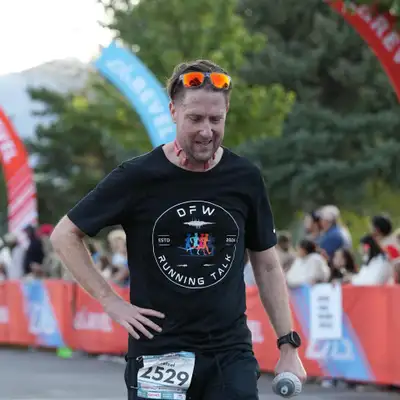
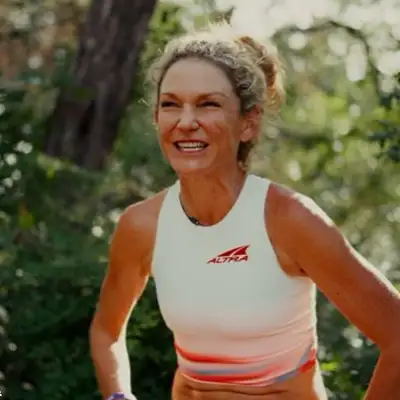
Welcome to another DFW Running Talk. I'm Chris Detzel and today's special guest is Nicole. Bitter. Nicole, how are you?
Nicole Bitter: Excellent. Thanks for having me, Chris.
Chris Detzel: Yeah. It's funny because I knew you, you probably didn't know me back in the day, 2014, 15. I don't know, but I know you ran with.
White Rock running co-op, and you were super fast. All those people were super fast, to be honest, with Brent Woodle and some others, doing some really fast things. The one thing that stands out, and we had this on, I call it the pre-show, but was you ran this a hundred miler you're an ultra marathoner and or ultra runner and and rocky raccoon.
I think that was it. Was that it? Yeah. And you get this. I dunno if it was it the US record of a hundred miles at the time?
Nicole Bitter: Yeah. In 2015 I had the North American hundred Mile record for Trails.
Chris Detzel: Yeah. And I was like, holy cow, we have somebody here that is extremely fast in [00:02:00] a hundred miles that's got the US record.
And so I thought that was really cool. And so I was really, I really appreciate you coming on and being able to tell your story. And so really today what I wanna do is. Get to know you a little bit just about your journey when you started to get into running, when you started then getting into trail running, then the ultras and all of that kind of stuff.
Did you start in high school? Did it start, when did you start running?
Nicole Bitter: Yeah, so in seventh grade I actually wanted to participate in a school sport and I had never, played basketball or anything of that nature, like more like of the ball sports that you would be on a team for. And so I went out for the basketball team and I quickly got a tap on the shoulder from my gym teacher and said, Nicole, you're not gonna make the basketball team. Like you could really make a layup, but I saw you run the mile and Gym class and you were quite fast. You should maybe consider cross country.
And I was one of those. Kids that if a teacher told me to do something, I was gonna quickly sign up. I was like a check the box, like gold [00:03:00] star kid. So I was like a gold star, like how do I get one? So I signed up and started running cross country on the team and I haven't looked back. So I ran in seventh and eighth grade.
My math teacher in the junior high was a, was the high school coach. Okay. And early on, he had me training during the winters in Chicago, running around the school after class, like doing workout. So I quickly was like, like part of the future high school team, he had me training. So he had me start practicing with the high school girls when I was in eighth grade and start doing workout.
So I was hooked. I loved the training, the discipline. I loved that I had somebody mentoring me, from that point on, I was running, I ran in high school and then I ran in college. I ran in Northwestern okay. I always gravitated to long distance.
Chris Detzel: Did you, so in high school did y'all win region, state, do any of that kind of stuff or how, what'd that [00:04:00] look like?
You
Nicole Bitter: I was a, I was pretty fast. I ran a 10 52 in the two mile and then a 5 0 8 in the mile. Those were my times. My team was quite good, but we were at a pretty competitive. High school. So we weren't like the state champions or anything like that, but we had a pretty good squad. So all my close friends ran, my sister ran with me.
So we had a good long distance team and more than anything, like my memories are less about, I remember those times probably those are some of the only times I remember are those, like high school types, but just the memories with friends and I think it just instilled a lot of good discipline in my life.
So I look back upon that.
Chris Detzel: Yeah. It's what it really, at the end of the day, even today, it's really what it's about to me is the community and the friends you build. Some of my good friends today are best friends are. Friends, running friends, so you get to college and what'd you run?
Was it a four mile 5K? What was the distance then?
Nicole Bitter: In Northwestern we had just cross country. We just had club track. So only cross country [00:05:00] was a varsity sport. So at the time it was a six k. It had just started for girls. And or maybe, I think that's right. I, yes, I think it was a six K.
Oh gosh, it's getting so long. There were different. Courses, depending on, it's hard to remember the event. So I was, Nicole you're not that old,
Chris Detzel: by the way. Thanks. You're really not. I,
Nicole Bitter: I, I wasn't super talented by any means. I was able to run at NCAA's once, so that was awesome. Okay. But I was like in the top seven in college, but.
I was not anywhere near like the names like Sarah Hall and Cha Flanagan, who are were running at the same time as me. They were exceptional. I was just thrilled to be able to compete and be at the team.
Chris Detzel: That's pretty good. Top seven in college you gotta give yourself some credit there.
Would that, thanks. Alright. You ran in college and you pretty disciplined it sounds and just that what was next? Like how did. I get into more stuff.
Nicole Bitter: Yeah. I had lived in Chicago for a long time and I [00:06:00] had decided that I really did not want to be in such a cold environment.
I applied to law schools and they were all in places that were in much better climates. I would say that were warmer. So I was accepted and I went to Baylor Law School. Okay. And at the time, Waco was a bougie,
Chris Detzel: no,
Nicole Bitter: that was before, wasn't. The current Magnolia days. I loved going to school there though.
I actually found trail running, believe it or not, in law school. I would run in Cameron Park in Waco, and it actually has an unbelievable trail system. So I started running there, like in between classes if I would get a break. I just found that, I needed that release. So I was thankful I wasn't competing or anything.
I was just trying to like, make it through the day, right? Get through my classes. But I always tried to make time to run, so I graduated law school, moved to Dallas, started my first job, and I would just run through the air, in between when I would get a chance. I was [00:07:00] in the office, so I would run in the mornings and I actually adopted a crazy dog who needed a lot of running, so I would run her.
What kind of dog was it? Sometimes? She actually is 17 and a half, believe it or not. She's still with us, Stella. Wow. Now affectionately called grandma. She is still alive, believe it or not. And she was some kind of border collie mix. She was a rescue dog. It was part of the metroplex mucks, which is now defunct, I believe.
But she. Got me back into training hard and right around the same time I had a friend at work who said, you need to join the White Rock co-op. You would love running with them. So I remember the first day I showed up, I ran with my friend Brent Yost and I met his wife Ali Gum at the time.
And, I started running there and met all like the, my longtime good friends. And started training with the co-op. So around the same time I adopted Stella and joined the co-op. So I [00:08:00] started to ramp up by running again.
Chris Detzel: So was that 2012, 13, something like that, or, because they started in 2011, right?
So I think
Nicole Bitter: it was probably 20. Yeah, it was probably like that when
Chris Detzel: they kicked off early.
Nicole Bitter: 2012 maybe. Okay. Or late 2011.
Chris Detzel: Got it. Got it. So you just started training with them and met some friends there and Yeah. Hung out. Yeah. Okay. And
Nicole Bitter: The group was primarily doing kind of marathon, so I fell into that.
I started just doing some local races. And then I remember I met Nick Polito and he he's still there. He was telling me all, all about ultra running and I was I love to do long distance running. I think I could probably do that. So I signed up and I ran my first. Ultra was, I think in 2012 it was captain Carl's like nighttime race and it was just keg.
And so that was when I started running and I just found that was what I was good at.
Chris Detzel: So did you find yourself do, are you a competitive pro? You obviously have a lot of skill, but do you [00:09:00] see yourself as a very competitive person?
Nicole Bitter: Probably, yes. Okay. I'm pretty competitive.
Chris Detzel: I figured I was just gonna, making sure and what I remember one time and every time I would see you, like whether it was on a picture or one of the races that, I forgot what the race was. I think it was in Tyler, it was a while back, but you're running and I saw you come out and you fell and I just remember, I think Nicole falls a lot, but she gets back up and just keeps going with this big Yeah, bleeding, sore on your knee and gash on your, so yeah,
Nicole Bitter: I do not have pretty.
Knees at all. They're very, a lot of scars. I think I'm maybe recently broke my nose. I have to go to the doctor. I fell on my face a couple of months ago, so that's not a pretty story. But yes, I've taken a lot of hard balls, trail running, but thankfully I've been able to get up thus far.
Chris Detzel: So let's go back.
So you got into trail running, did Captain Carls, how'd you do? What were you thinking? It was your first one? It was a ultra Oh, and a trail. Yeah. So it'd be different.
Nicole Bitter: At that race I got second and [00:10:00] I remember I was going very conservatively because I had never run even over a marathon.
I had no kind of idea what to expect. But I remember finishing and I was this wasn't really that bad. Like I felt like it, I was just running with other people because I figured I don't know what I'm doing, so I. I just tried to stay with a group as long as I could. But yeah, I just remember coming out of that race and saying, huh, I think I can go a lot faster.
I think I have a lot more potential, like I might as well do more of these. So I just, it started me on my adventure and I mostly stuck to Texas races to start out with just because that was all I really knew. I wasn't really. I wasn't as familiar with the sport or like the opportunities, right?
I had heard of Leadville, but I didn't really know a lot about these races, Western states. So I started doing all of these Texas events and I became very good friends with the race directors of Task Trails, Joe and Joyce [00:11:00] Persis, and so I would do their races. I started doing Rocky Raccoon, which at the time was one of the kind of premier a hundred mile flatter races in the country.
And I just, again, I just found that this, that was my thing. I was, I enjoyed the long races, the challenges of it, and it was fun because all my friends would come. To Huntsville and run with me. So we had such like a group of, I had like the perfect Pacers. The group would come down and help me out.
I, it's a little bit easier to go from
Chris Detzel: Texas or wherever to, to Houston or to Huntsville, yeah. Rather than, Hey, let's go to Western States and Right. Fly out there, you get all the stuff, so That makes sense. Yeah. Yeah. So let's go to the, you decided to, at some point do a hundred miles was I'm I assume that the rocky raccoon win that you got, the, that really good time that wasn't your first hundred
Nicole Bitter: that No, I had run in 20 13, 20 14 and then 2015.
So I won all those years, but each year I got [00:12:00] faster. So the 2015 was my fastest and that's when I set the record.
Chris Detzel: Were you, let's talk about that then. So whenever you ran those a few times before. Did you come into this one thinking, Hey, I have a chance to potentially set the record, or was that even a thought at the time?
Nicole Bitter: I knew it was the U-S-A-T-F championships, but in all the prior races I had felt like I was probably the underdog because there were like really talented runners that would come. So I did not expect to win the first two times. And then I think in 2015, if I'm remembering correctly, one of the really awesome runners that I looked up to, Liza Howard was also, yeah.
She was running and she was gonna go for the record. So I assumed if she's going for the record, I have to go for the record too. Oh. But I didn't really realize that I was going to run the time I did, because I think I beat the record by over an hour. I don't remember all the details, but I ran a lot faster than I expected to.
So [00:13:00] I remember finishing and thinking, wow, like I didn't realize I could do that. Now I look back and say wow, I, I can't do that anymore. But like at the time it was like a really exciting feeling.
Chris Detzel: Yeah. Would you feel like whenever you're going through that, and you actually did that, was there more pressure on you now than ever before?
Did you have a full-time job? You're an attorney and all these things. I assume that puts a lot of pressure on you in general, and so to be able to do what you're doing is gotta be, I would assume a little bit more. I dunno. No,
Nicole Bitter: I think it started to get to be a little more pressure, but at the time I wasn't sponsored or anything.
So it truly was it didn't feel like there was as much pressure, I would say. Okay. At, like in 2015, I joined the Ultra team and I, they're wonderful to work with. They've never held me to any specific expectations. That's awesome. Take me a lot of freedom. But I think as time went on, it became.
A little more of a job just because I was starting to run at like the big races like [00:14:00] Western States, UTMB. Yeah. Some of the more premier trail races. And then it's hard to not, it's hard to say that it's not stressful because going to a race like Western states, i'm sure there are people that are much better than me, like that feel like it.
They don't have a cure in the world. But I don't know how you can be at that race at this point with all the drones and cameras. There's a, there's hundreds of people, thousands of people out there. It's pretty stressful in my opinion.
Chris Detzel: Let's talk about Western states. You've done that a few times or more and got top 10 a few times as well.
So talk about your, I remember watching you the first time you did it, or at least watching on the thing, but talk about that what was that like, because you said you were doing all these Texas races. I don't know, I, I assume that wasn't your first out of state, I'm sure that was your, I assume, biggest race potentially.
Yeah.
Nicole Bitter: It was my second outta of state, so it was okay. It was new to me in 2014. I qualified for Rock at Rocky Raccoon. I got a golden ticket for Western States. I was at the. The training camp [00:15:00] and I actually realized I had a cath abs at the time. Shahi and I were out there together. We were running, we had gotten, we had both gotten golden tickets and so I realized quickly that, 2014 I was gonna have to pull out, so I didn't run in 2014.
So 2015 was the first time I ran Western. Yeah, it was pretty stressful. But I was very nervous, more so than I, I think I had ever been. I actually went off course a couple of times just because I think I was so nervous. Not that it, had a significant impact, but I just. I look back and think like that course is pretty well marked.
I don't know what I was doing, but I just had some other things in my personal life too that were going on. So I think it was a pretty hard race to get through, but I was able to get sixth at that race. I remember that. That was impressive. Super impressive. Thank you. So I was really surprised.
Chris Detzel: Yeah.
Nicole Bitter: And then I just saying, I've got two other top tens at Western, so two sixth and Wood seven.
Chris Detzel: [00:16:00] Did you love it? Or, what'd you think of the race? At least it sounds like you were going through some stressful things, the first one, but the second and third one. Yeah. Did it, was it a little bit better, less stress? Or was it still Yeah.
Nicole Bitter: No, it's a, it's an amazing experience, but I would say that I probably get pretty nervous.
Throughout different points of the race just because it just feels like a hundred miles. It's if you take it age station by aid station, it's a better way to digest it and like zone out from that respect. The races where I feel like I'm the most successful are the ones that I can break it into pieces and not think I have to.
I run a hundred miles because if you stand at the start line and think that I think that's, it causes me anxiety at least.
Chris Detzel: Yeah. Do you still feel that anxiety, like when you go and do the race, like during the race? Because a lot for me, I feel that at first, but then after being in it, it's the race is what it's,
Nicole Bitter: It's funny.
That's what my husband tells me, and I would say that. I wish I was the person who didn't feel anxiety during the race, but I [00:17:00] probably am that person that does lead towards just am I doing okay? Yeah. Am I don't know. I do have moments during the race, but I feel like the races where I'm most successful are the ones where I'm just able to completely release and zone out and.
Just realize that, as my husband would say it, it's really adult recess, right? Yeah. That's what running should be. It's really Exactly. You shouldn't put pressure on yourself, right? So when I can remind myself of that. And make that happen. I feel like that's when I've found I have the most success.
Do
Chris Detzel: you think that, look you even mentioned you're very competitive. When I race I might not be competitive, could bunch of, against a bunch of people that I know are gonna beat me, but I'm competitive about around people that I know I could potentially beat or even myself, in times and stuff like that.
Even at my age of 50. And I think that, I forgot my question actually. Sorry.
Nicole Bitter: I actually think I know where you're going with that. So I would say I'm less competitive against other people and just more competitive against myself. Got it. It's did I reach my full [00:18:00] potential?
Like for me, that's what I tend to gauge, like a good race versus a bad. I just want to, I wanna reach my potential. I would say that's like how I gauge, I would say that I'm competitive because, at the end of the day, there's always gonna be people that are more talented than you.
Or people always like, and so it's, I think being competitive against yourself is probably the best bellwether. I agree to have an enjoyed experience.
Chris Detzel: Yeah, that's exactly where I was going. As you kind start thinking about, alright, let's go back a little bit from, when you were first starting to run hundred about training.
Was that a lot different than. Then training for like a marathon or something like that. I assume it's gotta be, but sometimes maybe it's not. There's some of these guys running a hundred miles a week just to train for a marathon, and I'm like, that's a lot.
Nicole Bitter: Yeah. Yeah. It's really interesting.
I think there's so many different ways that you can go about it, and I've gone about it different ways throughout my life.
Chris Detzel: Yeah.
Nicole Bitter: I think again, and I [00:19:00] actually think you can be successful training in a different, in a number of different ways. So I always gravitated to high mileage. But for me I felt like having speed in there was one of the key components.
That's what was really one of the big benefits for me. Beyond even the friendships of the White Rock co-op.
Chris Detzel: Yeah.
Nicole Bitter: That was prob, that was the most important thing for me, but also that group really kept me fast at the time and I really appreciated that. Trying to keep up with all of them was a really good way for me to train, especially when I was doing.
Flatter and faster a hundred milers, which was what I gravitated to initially. So for me I've always been a high mileage person. I've reduced some of the mileage as I've gotten older, just doing more cross training, like the elliptical on a more regular cadence. But I. Probably was one of those a hundred mile people.
10 years ago I liked the mileage. That's where I felt strong.
Chris Detzel: It makes sense. You are doing running a hundred milers, you weren't running [00:20:00] marathons,
Nicole Bitter: right.
Chris Detzel: Did you ever run like street marathon type stuff or, you mentioned you did some stuff in Dallas, but
Nicole Bitter: Yeah, I've run some marathons.
Not I would say that I've never really done serious marathon training. That's one of the things that I probably would say I regret. I would've, done some more, like bigger cycles to train for marathons. But I have run some marathons. Okay. I've done couple sub threes. I've, but I've never like really committed to the marathons.
So one of these days I wonder if that's something I, I should do. Why
Chris Detzel: not check the list, check it off, put a cycle in, training block in there and see what you can do. It's fun to watch some of these really fast. Like Jim Wamsley or, yeah. Those kind of folks do a marathon or half marathon or whatever, just to see.
Like Jim Wamsley still ran like a one oh. Six or four. Oh, 1 0 4 or something. Yeah. I was like, no, it
Nicole Bitter: translates. You still have that scene. Yeah, it does. Yeah. I, they're incredible athletes, yeah. Yeah. I agree. It's fun to watch.
Chris Detzel: Because you [00:21:00] don't see it much. You're like, Ooh, I wonder how Courtney DE's gonna do in the marathon.
She's done a couple yeah. Recently, and just, I think it's fun, for them to kinda go off. And
Nicole Bitter: I think there's something to be said about doing different things. I think, when you do the same thing over and over again, at least for me, I think it can get stale.
Yeah. So I do think spicing up your training, there's maybe an element that makes it more engaging so that you're excited to wake up and do a run. For me I love to run, so I hope to always run, but. I've checked off a lot of the ultras that I really wanted to do, and there's probably not quite as many that I have on my bucket list at this point okay.
Chris Detzel: Maybe marathon is coming up, who knows? Yeah. Let's fast forward a little bit to this year. 'cause from what I can tell you, did the the, and I've never even heard of this, but Fat Dog Trail Race 20, is that this year? Or? Yeah.
That, that, that place,
Nicole Bitter: so this is one of those things like, as I've aged I've, I feel like I've checked off a lot of the things that I've wanted to do.
Yeah. So Fat Dog is is a course in [00:22:00] British Columbia. It's very beautiful. It's it's long. And it was just one of those things that I said, huh, this would be a fun adventure. It's not necessarily love ENT house. I mostly train on roads, so I don't even do a lot of trail running during the week just with work and things, but I figured it would be a fun experience and it proved to be so it was a good challenge.
So it took me a long time. I didn't have the runny legs that I would've liked for a lot of the race, but it was. Super fun adventures. That was one that, it just was, it just, it piqued my interest, so I decided to go for it. I think in the past I chose races based on where I would be really successful and what, or what I thought I would have a good race.
Now I don't do that quite as much just because again, I've run a lot of the flat races and they, they were great, but I don't necessarily feel, and you're very good at the flat too, right?
Chris Detzel: Compelled to
Nicole Bitter: yeah. Sorry. Western states are
Chris Detzel: really good at, I said you're really good at the flat. Oh,
Nicole Bitter: thank you.
Western [00:23:00] States is probably one of those, like middle of the road, mountain versus flat. It's like it falls somewhere in the middle. I think fat dog is more akin to a ton of vert, so a lot of elevation, a lot of climbing
Chris Detzel: I saw some of the pictures where you were walking or the video where you were walking.
You're like, oh
Nicole Bitter: yeah, lot of, you have to up those
Chris Detzel: mountains, so Yeah,
Nicole Bitter: for sure. And I, I wasn't able to run for a big chunk of the race, which was disappointing to me because that's my strength, right? So when you lose your your strength, that's not necessarily ideal. So I gave up a lot of time just because I, my legs weren't able to continue to run.
But again, that's what's the beauty of ultra running. It's like a constant challenge, right? It's like a metaphor for life. It's just. Every day is tough, like you just keep going. So that's what I've learned. It's like that's why I like doing some of the harder races, like the things that you're maybe not good at because it's an adventure.
Chris Detzel: I, I think I've seen you on this, on Instagram, like traveling in quite a bit of different places [00:24:00] over this last year or two. And I would like to get into a race that, so I'll give you an example is, from beginning to end of a race that you thought you were gonna do well and maybe you did really well.
But I would love to hear nicole's version of, Hey, I started from, mile one to seven. Did these things from, if we're doing a hundred miler, then maybe it's one to 20 and then 20 to 40 or something like that. And then when do you turn it on? When do you go, how do you strategically think of those kinds of things?
Does that make sense?
Nicole Bitter: Yeah. Yeah. It really depends on the race, I would say, just because it's very different and it also, it depends on how you're feeling on the day. I think that's the other thing with hundred milers is it's so dependent and so it's a lot of it's about problem solving, right? Yeah.
But I will give an example of Javelina. I had a couple of good races a couple of years ago there, and I will say that. It's similar to Western states where you probably don't really wanna start even thinking about like really going hard until close to 60 or so [00:25:00] miles because you really wanna be comfortable the first, I would say two thirds of the race because again, it's really critical that you get to the ad.
Portion, right? You don't wanna over fire. Like a lot of times athletes that go out way too hard. And then you know, they don't have anything left. I find it a little more challenging as I've aged, because I feel like sometimes I just don't have it in my legs anymore. So that's something I've had to get used to.
But I would say probably in most races you want to hang out for the first two thirds. And then the last third is when. You, I would historically go, I will caveat that I think the sport's changing a lot now, sometimes now it seems like you have to go for it, even to be in the conversation, right?
You'll watch some of the golden ticket races and you'll see some of the athletes that just have to hold on with the pack, right? In order to even have a chance at that first or second spot. So now that the sport's getting more competitive, I wonder if racing tactics are [00:26:00] gonna kind of change. But historically I would say I would be more conservative at the start in order to potentially have that longevity towards the end.
Chris Detzel: Yeah, I was talking to the winner of the Dallas Marathon and he was telling me, so he ran, it was his first marathon. He is 29, and he ran like a 2 23 and That's awesome. Yeah, it was really great. He ran in college and, ran like 13 minutes, 30 seconds and 5K, so he's, he was really fast and, but he was telling me like the first. 13 miles, 14 miles. He was like, okay. I was just hanging back. I kept the front of the pack, just in my sights, was in fifth or sixth place, but I just wanted to put them in my sights. Like he knew exactly what he was doing and he's never even ran a marathon.
He is done. Plenty of racing, is. Was the point, but because then I had to go to the bathroom, so I stopped the bathroom. I said, you don't usually do that if you're gonna win a marathon, man. Yeah. And then, I got back up with kind of the, this guy, his name's Joe Hale or whatever, so he is running with him and then he saw the [00:27:00] other three or four guys up front and he goes, so Miles, I don't exactly know the mob, but 15 or 16.
I decided, okay, I'm gonna start trying to catch them. 'cause there's this hill that started going down and it, the point was, is. He had this kind of strategy around, Hey, I'm gonna go and I'm gonna go at mile 16, or whatever the time was. And then from there I wanted to go and go.
And then I'll tell, yesterday I talked to the second place guy and it's a fun story because the second place guy was thinking was with the other guy. And he goes, I'm gonna beat this guy at mile 20. To 21, I'm gonna let loose. And so he let loose and goes really fast. But then the guy Steven catches him.
Another guy I gave in fourth place, the guy I was talking about before, went to the bathroom and he goes, he really let loose, he started running a 5 0 7 and then, I, there was no way I was gonna catch him. So they all had this strategy of letting loose at mile 22, 23, 24 to see what they had left, and it was just.
Insane to me. There's this whole strategy around, the last three or four miles, to see Yeah. If they can just waste these [00:28:00] guys.
Nicole Bitter: Yeah, I would agree. I mean it's, there's so much strategy, but sometimes negativity is the best strategy I would say. That's what's interesting is sometimes, like I do think being a newbie pays off, right?
Because you're just em blissfully ignorant. So sometimes I wonder I do love those days where you're just like out there. Taking it all in and sometimes, like not having the worry of what's gonna happen is what, what adds to some of the success. So that's why sports are, it's, running is it's so fun to watch is there's always like those stories where you're like, they come outta nowhere and they'd never been heard of.
I love that.
Chris Detzel: Yeah. It's fun at all levels, and totally. I love the competition as well, and I love listening to, folks like yourself that, get, that can go really fast and then have that strategy. Because a lot of us, when you think of it a hundred miles, especially, you really have to nail it down, but a lot of us, ah, just trying to finish the hundred [00:29:00] mile, but somebody like you, some of the elite folks they wanna do more than just finish.
They have this whole, yeah. Tactics and strategy to to go, mile one to whatever they're doing this a mile, 10 to 15 they're doing this, 10, yeah. And then they're going all out from 20 to 21, 20 to 21 for a marathon. We're all just trying to get through it, for the mo for normal people.
Yeah. But not, and like you said, from. Like the last two thirds, which, the last two thirds is mile 60 or 70. You still kept 30 miles to go. Yeah, no,
Nicole Bitter: It's interesting and it's really where mental toughness comes in, right? It's like about telling yourself that you can do it. I think that's where it's really challenging when your body's failing you, but to trick yourself into believing that you could.
Stay strong. It's tough.
Chris Detzel: Are you a night runner? Do you like to run at night or do you care?
Nicole Bitter: No, I definitely I run in the morning, so I'm definitely a morning runner. I, that's why I don't do a lot of trail running, I would say, because I usually have to be at my desk too early to really [00:30:00] get in like a meaningful long trail run in the morning.
So I do most of my runs. In the morning on the roads,
Chris Detzel: how'd you get through that 40 hour run? Was it rough, like through the night? What was that like? It was
Nicole Bitter: super, it was super rough. Luckily I had pacers, my husband actually paced me for the first night and it turns out he was really sick the whole time.
I was really worried about him because he was behind me, which was really unusual, kept. Like thinking, is he mad at me? What's going on? Why is he at me behind me? But he just didn't even wanna tell me that he was like, really sick. So like poor guy had didn't wanna leave me out there by myself, but he stuck it out and paced me the whole night.
And then the last, I had a, I had an awesome pacer during the day at the last night. I also had a great pacer, but yeah. It was a really long effort, but having people with you always makes things a lot better. So I really owe so much of my running, like my strong races or even [00:31:00] my like, not as strong to the people that are willing to be out there.
'cause running's kind of a selfish sport if you really think about it. Like especially ultras. Oh my gosh. Yeah, everybody's coming out for you,
Chris Detzel: right? To run your race.
Nicole Bitter: You're lucky when you have all the people surrounding you and be willing to help. So I think that's where it's really important to make sure you thank them constantly, because of course, they're out there with.
Middle of the night, like with you cheering you on. So I know all, like I've been so lucky over the years to have so many good friends and my husband that have been willing to come with me to these events and Yeah. And support me. And I remember a lot of the White Rock co-op groups still to this day have been some of the people that have been willing to do that.
So I owe them and their families a lot.
Chris Detzel: That's awesome. I remember one time, so my wife did her first a hundred miler, Rocky Raccoon. Yeah. And Mile. I guess 60 to 100 or whatever. I forgot what it is, but I was pacing her and at that point she was just walking. So it [00:32:00] literally took us seven hours to do 15 miles or 16.
It was ridiculous. Yeah. But it was at night and I remember one time she was like, I said, Hey, she was like, can you hold this thing? And she's gonna get onto me for saying this. 'cause I always make fun of her about this. But even to this day, this is a long time ago, but I go, yeah, let me put this thing up that I have.
Chris, you are my mule and you need to help me. And I was like, I'm gonna help you. I go, just, lemme put this in my pocket, yeah.
Nicole Bitter: No, that's the hard part about when you're doing some of these longer efforts, you it's tough. You get really tired. I think as a younger person, it used to be easier for me as I've aged, like staying up all night.
Oh my gosh, that's really hard. Like I think that's one of the other things that's really challenging. Yeah, that was a hard night.
Chris Detzel: What'd you do after did you just go take a shower and go home and sleep or, geez,
Nicole Bitter: that's what, yeah, I did. Luckily we were really close to where we were staying and just, I ate dinner and went to sleep.
My husband [00:33:00] beat me to sleep. He was like asleep within oh, he was sick three minutes because he was sick and I. Probably an hour. By the time I got home I was asleep. But the funny thing after ultras is a lot of times you don't sleep that well. Yeah. So it's not like you just have this blissful like 10 hour sleep, right?
You're, you get three hours of sleep and you're, all of the adrenaline is still going.
Chris Detzel: Your body's probably sore in different places. Yes. And yes. Everything's feeling weird. Sure. So as you you've done really some awesome things, but what are you, what's next for you?
What are you thinking the rest of starting next year, are you thinking anything or,
Nicole Bitter: That's a really good question. This is the first time that I've been at this impasse where I'm not sure what I wanna do. Was just concentrating the last couple of months on getting healthy.
I was supposed to do a race in South Africa and I unfortunately fell pretty hard and I even before that I was dealing with some long injuries, some lingering things. So I am trying to make sure I am healthy. I think I finally am, and so I'm starting to train again, but I've just been giving [00:34:00] myself like the time to think about what I really wanna do.
Chris Detzel: Yeah,
Nicole Bitter: I run for ultra. So I'm very lucky that they're very supportive. I'm trying to make sure that I contemplate what is going to inspire me and invigorate me. Yeah, because again, let's face it, I've been doing this for a really long time, yeah, I've been training for, since I was probably like a.
12 years old, even earlier for running. So at this point I just wanna make sure, like I'm really thinking about what will bring me joy during the training. So I'm trying to figure that out right now. But there's so many great options. What brings
Chris Detzel: you joy? What's the, what's you know as you kind, when you say training, is it still running a hundred miles a week?
Probably.
Nicole Bitter: No, not as much. That's why I think it's challenging. I love to run. Yeah. I think I find a lot of joy out of the social aspects too. So I'm very lucky. I train with rogue. In Austin. I have a lot of good friends that I run with there. Lucky my husband runs with me when he'll slow down for me and I have a young [00:35:00] dog that's my new training partners, running with the company brings me a lot of joy, so I love to train.
I think it's about finding the races that inspire me, and that's a little trickier at this point. So I'm trying to figure out like exactly what I wanna do next.
Chris Detzel: Do you think it's longer or is it gonna be shorter races? What's the, you don't. I
Nicole Bitter: think probably shorter for a bit. Yeah. I think I might try and do a fast fair thought if I can.
So that's might be up my alley.
Chris Detzel: That might be fun. Wow. One of the things that I've always thought was, you tell me what you think is, look, you have a husband that that's also a runner. You're a runner. And I always thought, my wife's a runner. It really bodes well for.
Understanding each other, in a lot of different ways, and my wife runs a lot more than I do, I'd go to Boston with her or wherever she goes, I'm going, and for the most part she'll do it for me, I'm not doing what she's doing.
And so what do you think about that? Like just having a partner that really is in the same sphere as you mindset? I think it's really important or it helps.
Nicole Bitter: Yeah, it's definitely [00:36:00] beneficial. Like I, I think, I've seen people successful in so many ways. Like as long as you have a supportive spouse, I think that's like the key fundamental thing, right?
You want a partner that's there for you and believes in you. If you have somebody that's not invested in running, that's hard to be successful, right? Yeah. So I completely agree with you. It's really fun too, to train together, so I very much appreciate that. We can do that together. A lot of times that's how we spend time together is running.
Yeah. So that's nice. I'm glad we have the common interest. So I think the support is everything, but as long as you have a spouse that's willing to show up for you and be your crew, that's also pretty, like that works as well. So I have some friends whose spouses don't run at all, and they're like.
The chief crew and they're amazing. Like my husband does a lot of the track races. Yeah. And you should see some of the people that are there like that are the chief crew. They haven't run a day of their life. Yeah. But they're like super invested in the event. They're like there all like some of them [00:37:00] six days, like doing all the crewing.
So as long as you have the support, I think that's like the fundamental aspect that makes you successful.
Chris Detzel: The volunteering part is, the hardest thing to get for some of these. Yeah, these races and everything else, and you'll see some really good race directors and things like that are just.
They have solid volunteer programs. And I think that's key to making that work. And like you said, things that your husband does with these track things. It could be easy to, get people to just volunteer their time to do this. Yeah. It's a lot of work. What, if there's anything that, I'm sure I missed a thousand things, as you think about, something that I might have missed or something that you would wanna talk about? What would you, was there anything that I missed or,
Nicole Bitter: no, I thought this was great. You did a phenomenal job. I really think at the core of it, like I look back at so many of my memories with the White Rock co-op like so fondly.
Yeah. And all those people that I ran with are, they're still lifelong friends. I still talk to some of them on, some of them on a daily basis. Really. [00:38:00] I think like some of the, I, Brett Yost is a really close friend. Okay. So we talk on a pretty regular basis, like most days.
Chris Detzel: That's awesome.
Nicole Bitter: Just to stay hi and check in and, I still am very good friends with James s Rick Simonson cutter drum.
And it, the list goes on. Yeah. All those people are awesome and still are great. They're, and they're. Their wives as well are great friends. So I'm just really I look back so fondly of the memories that we have running and the funny stories, so I love that. Yeah. You said you part of, that's what's important about running.
Chris Detzel: It's the community, and you mentioned that you run with Rogue and you've been in Austin, what, a couple years, is that right? Or
Nicole Bitter: four
Chris Detzel: years? Four years. Okay. Actually, yeah,
Nicole Bitter: we were in Phoenix for a bit before. Yeah. Time flies. Did you have fun?
Chris Detzel: How is that, how is that, you go from one place to another.
It's gotta be hard at first soon, but running community in Austin is big.
Nicole Bitter: Yeah. I mean it's really hard. Leaving Dallas was really tough. My husband was in California at the time, so that's why I moved. And [00:39:00] then we moved to Phoenix and finally we got back to Texas. Yeah, happy to be in Austin.
But yeah, I would say like when I look back at all of my friends, most of my friends as an adult have been through running. So we were just in Phoenix last weekend and. We were able to see some of my best friends there. The Currys and Nick and Lauren Curry are great. They're really. Strong runners as well.
My goddaughter summer is there. So like I've met like such great friends through running. I met my husband through running. Yeah. We were both running for Ultra, so again, like all the places I've lived, it was hard to make the moves. But I've met like great people through running.
Same with Rogue. We have Coach Kathy. She's amazing and all of the runners there. So yeah. It's just the people you meet through running are, they're just, I would say they're great eggs. Yeah. I just always, I have many lifelong threads [00:40:00] through running.
Chris Detzel: Yeah. And I think that's what it's about.
And that know you, you hang out with people that do similar things that you do. That's, you can bond on running, and just talk about races or how you're feeling or how it worked out when you know, or what to wear or, it's a lot of things that you can bond on. And then you start talking about normal things sometimes.
And so I love that. Nicole, this has been really great. I really appreciate your time and getting to learn a little bit about your journey and what you've done and what you're going to do. You're a staple here in the DFW area, so I really appreciate you telling your story.
Nicole Bitter: Thank you so much for having me. I'm so grateful. I was very honored to be on. Thanks for letting me reminisce about some of my Dallas days.
Chris Detzel: Yeah. Thanks everyone for tuning in to another DFW Running Talk. I'm Chris Detzel and our special guest, Nicole Bitter. Nicole, thanks so much.
Nicole Bitter: Thank you again.