DFW Running Talk: Aaron Pearson
===
Chris Detzel: [00:00:00] Welcome to DFW Running Talk. I'm Chris Detzel, so let's get started.
All right. Welcome to another DFW Running Talk. I'm Chris Detzel, and today's special guest is Aaron Pearson. Aaron, how are you? Hey, way above average. How are you, Chris? I love that positive attitude. That's something my uncle used to would say. Something like that, I'm doing amazing, or, better than average.
I love it. You've been around for a long time. I've seen you, you've even been on a podcast or two just with, multiple different people, but you and I have never sat down one-on-one to go through your journey just to see how you started running. And you've done some really cool things.
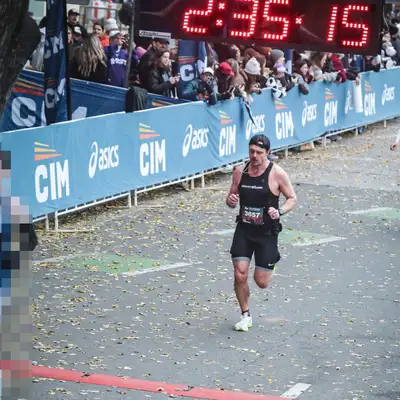
And one of the things, and I'll just mention it is you ran ~Indianapolis and you got~ a PR of, I believe, 2 35 and some change. Is that right?
Aaron Pearson: ~Yes. Yeah. C CIM, but CIM, sorry, CIM not Indianapolis. My bad. Yeah. Heard, that's a good phrase too. ~CIM. Yes. Yeah. The goal was. 2 34 and change. And I just found out, I didn't even realize that my official results were 2 35 0 2.
Pretty close. [00:01:00]
Chris Detzel: So close. Yeah. ~Sorry about that. I was thinking Indianapolis on my mind. A lot of people did that one Yeah. As well. But yeah,~ CIM that was really cool because, you had Maddie grace and Melanie and Jennifer Pope and Eric Bretl, and a bunch of other people that just did some amazing things over at CIM.
So it was cool. And we'll get deep into that. But first, let's talk a little bit about your journey. What did, where'd you start off running at? When did you start it?
Aaron Pearson: Yeah, I think so. Like the I will fast forward pretty quickly, but I remember the very first race that I did was like a one mile race for an arts and crafts festival for my hometown.
Never thought anything of it. And then we did a thing that's called a, I'm from a small town and we had the mascot was called the Blue Streak. We used to do this blue streak mile, which was like a mile and a half or so. And I think doing that in the arts and crafts, I realized that I was a decent runner.
And I had one of the, quote unquote fastest times by doing that. However, I [00:02:00] was more of a what are the cool kids doing? What are my friends doing at the time? So I didn't really pay much attention to running. I actually played football and basketball and kind of was forced to run track because you needed to stay in shape for football.
That makes sense. And so I did track I ran, or I ran track rather, and had some fun. We did, I did four by eight. I did the 800, that's where four by one, four by two smaller town. So you could play three sports. You could yeah. Be a part of multiple things that, I would say bigger states are not as accustomed to.
You kinda pick your lane, but what state
Chris Detzel: were you in? Where was this?
Aaron Pearson: Yeah. I was born in Kansas and grew up in Kansas.
Chris Detzel: Okay.
Aaron Pearson: Okay,
Chris Detzel: cool. I remember one time I ran the 800 in high school and I think I was a junior or senior or whatever. And never ran it before. And I got first place that's, I beat everybody by barely,
and I was like, I felt like this shit. And I wasn't. At that time I couldn't believe it. So it was fun. But anyways, [00:03:00] I digress. That's awesome.
Aaron Pearson: Yeah, the 800 is not fun. It is fun. It's like a, it's a grueling, 400 meters is a very tough race, but then you do it twice and it's almost at the same speed, or at least it was for me.
I think the fastest I ever ran a 400 was like a 50 or 50 and a half or so. That's pretty good. The 800 I got I started running that race. I, they wanted me to continue to run longer distances. I didn't really wanna do that. I didn't get into that until a little bit later. But I would run the 800 my senior year I.
I don't know. I think it was just good coaching, maybe some genetics, some hard work, whatever. But my senior year I was undefeated in the 800 until my Intel state. Wow. And then got second place in state. And so that's my claim to, at least for me, from my hometown kind of claim to fame, if you will of getting a podium at at state.
At state.
Chris Detzel: Do you remember the time that you were that you ran or No.
Aaron Pearson: Yeah, it wasn't my fastest time. It was I actually was in like eighth or ninth [00:04:00] place at the, after the first lap, and then Wow. Yeah, just kicked the last two, 300 meters which is fun race. I wish we'd had some footage of it, but I just remember, especially
Chris Detzel: in the last 300 Yeah.
To watch man, like when you're watching like the Olympics and stuff and, I'm always watching reels kinda, people kicking and kinda at the last three or 400 and you're like, holy cow.
Aaron Pearson: Yeah. The, yeah, exactly. The last Olympics was amazing. Just watching everybody gritted out and that's what the 800 is.
It's who's just basically there's talent involved, but I would just say it's a lot of like heart too, right? It's just like who can push through the pain, which I think maybe is why I liked it and hated at the same time. But my time was, I think it was like 2 0 1. Okay. So not, it is definitely fast.
Not anything crazy fast. My fastest ever I think was like a 1 59 5 or something like that. But I look back with, I wouldn't say like regret, but I would change some things. If I was, smart, I would've done trained differently. But yeah, let's just think
Chris Detzel: most of us as [00:05:00] kids, high schoolers, just don't know.
We don't care. Yeah. And then you look back, it's man, if I was just 22 again and I worked as hard as I did in the marathon on half or whatever, just think how fast I could have been at 22, 20. You know what I mean? Or whatever. Yep. But I wasn't yep. I wasn't running till I was 37 oh, really? Okay. Yeah. Yeah. Wow. It's, but it's not about me, but I think that there's just some people that just, get running later in life. And so I, you started, you did the hundred in high school and you're pretty good and, get second. Going to state is pretty darn good, so that's pretty impressive to get second no matter what state you're in. So what was next? Did you stay into running after high school or?
Aaron Pearson: Yeah, technically I did I say technically because I signed a scholarship. I got a, I had offers for football and basketball. I signed an offer of intent for football.
I think I think it was like January, February, whatever's like the signing day type was. So I did that, [00:06:00] and then it got closer and closer towards the end of the school year, and I was like, I just don't know if I want to go there. I don't know if I want to go play football. I don't know if it's just with my friends.
I was honestly like a confused 17-year-old kid didn't know what I was doing. Maybe that's relatable, maybe not, but
Chris Detzel: I'm sure it's,
Aaron Pearson: yeah, I just, I didn't know what I was gonna do. So I just continued to talk to my mom and just more so pray about what do I do here? And at that point, I hadn't even chosen a college.
I was like, all right, where am I gonna go? And I think it was like the last week you could possibly register for school. I decommitted to to college to play football and my mom basically took me to an adjacent town where there's a really good track and field program and said, Hey look, this is.
You guys were recruiting him earlier this year, have you filled the spots? And they're like you can always make the team, basically. And I got scholarship luckily I think for the first two weeks I got scholarship and it's if you don't make it, you don't make it. But I got scholarship and then made the team, which was awesome.
Great experience. I gotta run with a [00:07:00] couple of Olympians, which was awesome. So that's pretty cool. You get a
Chris Detzel: scholarship and what, like what races? And yeah,
Aaron Pearson: 800, 800 and 1500. And then in those, they actually realized like, Hey look, you should try some longer. And I never really recorded anything, but I did do a time trial for my coaches because I was gonna have to sub in for the mile.
And it on a whim, I ran like a four 40 mile and they're like in high school and they're like, okay, that's not bad. Let's, look into that. But I just continued to do longer stuff in college. So that was kinda like the stepping stone,
Chris Detzel: so that's interesting that you decommitted football and just rethought everything and just decided to go into track.
That's a, it's a rare thing,
Aaron Pearson: I would say so I have, I honestly, I'd have no regrets about that. I think I made the right decision. Yeah. 'Cause I was, 5 9, 1 75 and yeah, pretty strong, pretty fast. But getting into college football, like I would've been fine. But yeah, this was probably, [00:08:00] I was probably the best at football, but I had the most potential probably in running is the way I started to look at things.
Yeah.
Chris Detzel: Did you play running back or what? Wide receiver what?
Aaron Pearson: Slot and corner. So I did a lot of running. Okay. Did a lot of did a little bit of receiving, but play defense.
Chris Detzel: Okay. Got it. That's, at least you didn't have the ball much, so you wouldn't have got tackled a lot.
Sure. You can hit people, but that's, that's all right. So you go to college and you get a scholarship for track and do the 800 and it sounds like a mile and things like that. There's not much. There's too much. What do they, they actually have in college, they have cross country, which is like four miles or something like that.
I dunno, did you ever think talk that or Never did. Cross Country.
Aaron Pearson: Okay. Never did Cross country never
Chris Detzel: was interested in that.
Aaron Pearson: No. It and that's again the coaches continued to ask me to do it. They're like, Hey, you're on the team for track and field. You should do cross country. And I was like, I think I just wanted to hang out with my friends and to do other things that was like not necessarily sports.
Sports were basically, it was nice 'cause I got some [00:09:00] scholarships and I got paid for school. So like I was making some money, which was cool. But. Yeah, so that was like my first year. My second year I actually went back to my, like to a, an adjacent town. So these are all adjacent towns in southeast Kansas.
I went there and then I transferred to ku so the University, university of Kansas and tried out, made that team, my track and field coach from Coffeeville, which is the original kind of school that I went to my freshman year. And I should have stayed there for two years. I just, different decisions, different paths, but I made the team.
That's just one effort. Yeah, exactly. You just fork in the road, if you will. Yeah. But I made the team at ku the very first ev or the very first cross country meet 'cause I had never ran before I met. I remember sitting with the coach and he was like, so what's the most mileage you've run per week?
And I was like, maybe five or 10, maybe 20. Yeah, like 20 would be like a very long week or [00:10:00] something like that. He's oh, okay, so let's try this out. The very first day we ran six miles and I was like, okay, cool. That's not too bad. He's that's just our warmup. We'll, do you know?
Oh no. We were gonna get to so many other I would say levels, if you will, but yeah, there's a guy, his name is I think it was Stanley Redwine was the coach, and he's like in the KU kind of hall of fame now, but he he told me, he's look, if you can make this right, then. I know you're gonna put in the work to make everything happen, but so great coach, great mentor, went through all the signing of the paperwork and did it all myself because I was not on scholarship yet, made the team. And then both of my parents, so this was in 2000 and 10, I believe, 2009, 2010, or maybe 11. I have to look at the school year. But somewhere around
Chris Detzel: there.
Aaron Pearson: Somewhere around there. And what happened was unfortunate at the time, both of my parents within a couple of months had basically lost their jobs. And so my option was either [00:11:00] drop outta school which I didn't wanna do at the time education, but also, it's just fun to be in college. Yeah. Or go to work and pay my way through school.
And that's where I paid my way through school, didn't ever do anything with the track team. And then I started doing some road race type of stuff. But that was like my college journey, if you will.
Chris Detzel: Okay. It's always a, there's always forks in the road and, at least you finished college and did all that. Yeah. So yes, there is, they took more money for sure. Yeah, they always will. That's all right. So you finished college and, it didn't work out probably the way you wanted it, it worked out fine, you are where you are today, but so what happened after that?
Aaron Pearson: Yeah, I started to do some five Ks and just continue to run, to work out, honestly, to be, transparent at some point. My daughters may listen to this podcast who are much more younger than anything else that so I share with them. But I would really just use it as like a way to stay in shape enough or to [00:12:00] if I went out the night before, just sweat out alcohol, sit, stay like sharp throughout school.
So I did a couple of those things. I was also. Yeah, literally that's just the truth. That's just normal,
Chris Detzel: College behavior,
Aaron Pearson: Yes. Yeah. So I don't do that anymore. I've I enjoy calling enough for probably most of my life. We'll just say that. But I was dumb. Also, there's probably many things you can pull away from this podcast of me being not the smartest, but the thing that I had was I would say a level of stubbornness because my freshman year in high in college, I decided, Hey, there's a half marathon.
I don't know why, but there's a half marathon in Tulsa. Let me train for this. I asked my coach, I'm like, Hey, can I go run this? And he is sure, how many miles are you running per week? And I was like, doing the math and whatever else, because I didn't have a garment. I just had a total time and mapped it out.
I was like total time. I think it's, this. And he's okay. The longest I ever ran. Was I think five and a half, six [00:13:00] miles up until that half. And I remember my mom picking me up at two o'clock, three o'clock in the morning driving me to Tulsa to jinx, to sign up for this Route 66 race and ran my first half marathon there.
And I was like in basketball shorts and almost just horrible shoes. So I technically did run a half marathon on no clue what I was doing.
Chris Detzel: You, hopefully you learned, you probably didn't even learn anything either. What pain felt like, yeah, that's man doing, I've heard people doing marathons.
Like I remember this one guy telling me it was on the podcast. He was like, I just went out and did he did a 50 miler just to say, yeah, I did it. I thought to myself, that's the dumbest thing. Like, why would you do that? Like I'm not trying to, say you don't do dumb things sometimes, to me I'm thinking, man, you're gonna get injured, hurt.
Why would you put yourself through that kind of brutality? Half marathon's a little different. It's not that bad, but it's still gotta be rough if all you were in was six miles,
Aaron Pearson: yeah. [00:14:00] Yeah. That was the long run. I actually went back at the time to look back at the time 'cause I think of, then I was just like, sweet.
I finished a half marathon and the time actually surprised me more than anything. 'cause I was like, okay, maybe there is, potential with this or maybe I do have some, what was it done? National? I think it was like a 1 31 or something like that. Dang. Yeah.
Chris Detzel: Wow. That's crazy. For your first and you, wow. Okay. Yeah. Wow. I'm not surprised, but like this, that's fast for somebody that wasn't even shape at all,
Aaron Pearson: yeah. All right. That much where it's great idea to, to use for running a half marathon. Crappy shoes. I'm
Chris Detzel: sure
Aaron Pearson: oh man, they were probably my lawn mowing shoes, if we're gonna be honest here.
It's like
Chris Detzel: high tops.
Aaron Pearson: Yeah.
Chris Detzel: Like basketball shoes, basketball shorts, yeah, I'm sure MP
Aaron Pearson: three player. I know for sure I was holding that in my hand, the MP three player in my hand with the corded headphones. What I got right now. But yeah, [00:15:00] when you're young you can do stuff like that and doesn't phase you running a 1 31.
Yeah.
Chris Detzel: Think about that. 1 31 is not slow at all, maybe what you're doing today. Okay. I can easily, you could easily do it one 30, but most people would die and it just get 1 31, yeah. In general, once and especially for the first time and running just a few miles, six miles at the max, and certainly not in shape.
That's wild. So you, you do some ha you do one half or whatever, you finish college, and so then what, what happened?
Aaron Pearson: Yeah. The, I would say the, I moved to Dallas a series of events here at that point, I had a really nice job offer. I think it was like May 3rd, actually, I don't think it was May 3rd.
May 3rd had a really nice job offer. And then, like job of my dreams, whatever else they told me everything they're sending over the paperwork and I think it's like J yeah, the fifth. So then May 5th, single de Mayo I get in an accident. It's my fault. I didn't see a [00:16:00] person totaled my car and because of that I couldn't take the job.
It was at Interstate batteries here in Dallas. And then I was like okay. Tried to apply for a bunch of other positions but still ended up coming down to Dallas. My girlfriend at the time now wife was down here as well. So that was another kind of like reason to come down. But I came here in 20.
Was it 2013 or so? Yeah, and I was just running because I literally had no friends, like nobody I knew. I had absolutely nobody I knew in Dallas. And I told myself, I remember it was like one like day in the summer. It was like maybe August or so, and I ran outside and it was like raining and I was like, if I can run without stopping for nine miles now, I haven't done that for a long time, but if I can run nine miles, I can run a marathon.
So for whatever reason,
Yeah, please make that make sense. Yeah,
Chris Detzel: that makes sense. You probably ran like a, 3 0 5 when you did it anyways. Go
Aaron Pearson: If I can run nine miles, I can run a hat of marathon. If you remember Dallas at all, Dallas 2013 Marathon was canceled. Yeah. [00:17:00] And I do remember, I spent forever training for this thing, had no clue.
Pulled out a Hal Hiton kind of training plan. Let's go do a big d, do what? Did you do Big D instead? I did count it. You remember that one? Oh, okay. I do remember Big D. Yeah, I heard that was not a very favorable course either.
Chris Detzel: It was terrible. That's the one I did because Dallas Marathon was canceled.
And so it was my first marathon and I did Big DI did okay. But, but I remember it was just like afterwards, there's no food or hardly any drinks. It's a small cup. And I'm like, man this place sucks. But anyway.
Aaron Pearson: Was
Chris Detzel: it
Aaron Pearson: in Irving? I can't remember. I do remember the name though, the time I was in
Chris Detzel: Dallas.
Okay. I forgot where, but I forgot. I did it. I did it once and then I paced at four 30 once and Okay. I decided never to do another marathon for that.
Aaron Pearson: Yeah, I was gonna say for many of the podcasts I heard you, you're like, nah no, I'm just gonna, half marathons are fun.
Chris Detzel: Yeah, I like it. And I can do a lot of them if I want, yeah. All you're in shape, ish, right? For [00:18:00] Dallas. Dallas was canceled 'cause the weather and then you trained for it? Or what happened?
Aaron Pearson: I just continued to run. And I was like, where, what am I gonna sign up for? I remember frantically like looking on the computer.
'cause one, I was 22 years old and was super one, did not have a lot of money. So I was like, I can't fly somewhere. I now wanna run this marathon. 'cause it's like the thing that I've been building up and doing and whatever else. Yeah. And I did all the training myself, which looking back at it was not like crazy rigorous, but for me to go from nothing to, I think the longest I ever ran was like 17 or 18 miles.
I did 35 miles at like my peak. Which Yeah, I know. Like this guy. It's at least half doable, yeah. At least it's something, yeah. All my friends now left because I was like, I'm still the lower mileage guy. I just yeah, fly under the radar with the mileage.
But no, I ran I had no clue how to fuel. And had no clue what to do at all for Cal Town or just a marathon in general? Just probably like a lot of [00:19:00] people. There just wasn't a lot of information out there about That's right. What do you do and how do you do this? And I remember running that race you
Chris Detzel: were doing by yourself.
You're still running by yourself in 2000, so you didn't have anybody to. Guide you? Nothing. It was just making stuff up with the fly. Okay, got it.
Aaron Pearson: Yep. I made my, I think I still have it, it's like in a folder of what my training plan was. I just put it on my wall, said, all right, cross training today.
Three miles today, six miles tomorrow. And I just remember coming back after a long run and my wife would give me like food 'cause I barely took any goo or anything. I didn't train with it. That's what actually, yeah. Really messed with me on the run is that I just, it gave me GI issues 'cause I'd never had goo before and yeah.
Rocked my world. And then it got hot. Yeah. But yeah, it was tough, I think. And it was Cowtown.
Chris Detzel: So Cowtown not, I love Cal Town, but. It's not an easy course.
Aaron Pearson: No. Yeah, I love it too. I love doing the halfs there. I don't know if I'll ever do the pool again, but I love the half.
Chris Detzel: Was that the only time you ever did the full?
Aaron Pearson: [00:20:00] Yes. Yeah, it was. That's funny. Yeah, I've done the half, many times since then, but yeah only the fool. One time
Chris Detzel: I've done it like 10 years in a row or something like that. Oh wow.
Aaron Pearson: That's
Chris Detzel: awesome. Yeah, it's fun. I just, I enjoy it. I don't like driving all the way to Fort Worth, but it's a great race.
All so how'd you do the first one then? So it sounds like you did poorly.
Aaron Pearson: So I thought, I was like, cool is everybody who runs, who trains for a marathon should be able to qualify for Boston. That's cool. So I was going for that. Okay. I didn't know you had to go F SLU faster than the time.
So I think the time standard at that point was 3 0 5. At mile 22, I think I had it. And then I ran, I think it was like mile 24. I was just absolutely dead, just barely alive. But I ran a 3 0 7 for the first one.
Chris Detzel: Geez. Your first marathon?
Aaron Pearson: Yes. Okay. Yeah.
Chris Detzel: Geez. Okay. Wow, that's impressive.
Aaron Pearson: Yeah. Okay. I don't think I walked for a week, honestly.
That was tough. I'm sure.
Chris Detzel: Wow. This is, okay, so you ran a 3 0 [00:21:00] 7, which is pretty impressive. If you look back, I'm sure, how many people do you know running a 3 0 5, 3 0 7, their very first marathon? It's not it, maybe you know, more people, but it's still pretty rare to just do that well and with is less trainee.
You know what I mean? Yeah.
Aaron Pearson: Yeah, I was gonna say, I think I know people who. I have so much talent and then did do the training, I would say the right way. And who ran Yeah. Significantly faster than that. Sure. But probably not as many people as who were naive to the space and did what I did. And probably that time would be my guess.
Yeah. 'cause yeah, it's just a, you just, yeah.
Chris Detzel: There's this woman, she's 20 years old and her name's Jira. I don't know if you know who she is, but anyways, she runs with Pegasys. And she's 20. And, she trains though she trains hard with what's his name?
Anyways, with fonts.
Oh yeah. And the
Pegasus group. And so she, her first marathon, she ran in Dallas and ran up like a 3 0 5. Wow. And she was hoping for, [00:22:00] but the point is yes, it can happen. I'm not saying, even if you have talent, it's very difficult if you don't train right.
It's just a 3 0 5 is extremely fast. Let's just, for the most part, most people aren't running now, people you run with when you're around most people, it's just a normal thing. It's yeah, that's no problem. But in general population, very small percentage of people are running that.
You know what I mean? And so to even get that fast without proper training or hardly any training, it shows one, you get a lot of ability, and we'll get into that here in a minute, but obviously you're already telling me what you're running in half and full. All so you run this, you don't get Boston, but you get pretty close.
So yeah. What were you thinking? Were you like, oh man, I gotta do something different, or, I don't wanna do this again, or what?
Aaron Pearson: No, I think after that week is more of a I'm just very, I would say. Goal driven or focused, if you will. So I'm like, I have to get this. It took me a long time.
My first Boston wasn't until 2019, and it wasn't for a lack of effort. It was for, I would [00:23:00] say to not get into every marathon, but it's like there, there was pivotal races that just training didn't line up, and I didn't know why wasn't fueling properly. So I just did a lot of stuff that was just like, if anybody listens to the podcast, it's like just if you know what the problem is, go solve for that problem.
I knew what the problem was and I just was stubborn and didn't fix the problem. And it was
Chris Detzel: fueling,
Aaron Pearson: yeah, fueling and honestly, I would say a little bit of volume. I didn't need a ton of volume, honestly to get my to get my bq, but. It was the fueling. Yeah. It really messed with me. Now I only take the chomps, like the, yeah.
The gummy looking things. So those have really helped me. But yeah, it was the fueling and it just kept every time during a race, like hitting a wall. 'cause I would stop fueling because it would just knock me out. And so then by that point my stamina and everything else would, was fine, but just my muscles would lock up.
Chris Detzel: Yeah. That's obviously fueling and maybe lack of drinking kinda stuff. Yeah.
Aaron Pearson: Oh yeah. I didn't know you needed to stop at [00:24:00] every water stop, now I don't miss it, but it's yeah, it's oh no, I'm not thirsty. Why should I drink any water?
Chris Detzel: Yeah. Or electrolytes or something, yes. I carry a water bottle.
My wife calls it a sippy, because I could run a five, I could run a 5K, and I run with my sippy. There you go. So it's just, it's a
Aaron Pearson: security blanket. There you go.
Chris Detzel: Sometimes it gets hot in Dallas, and so when you're running in the summer, I get thirsty, man. And so what, A few times I didn't have my water bottle and, I've just felt like crap even after five or 10, whatever, half, and so I was like, you know what? I'm just carrying this thing. So I just got used to it. All so 2019, you're still not making it, not doing it. What then, what was the breakthrough?
Aaron Pearson: Yeah. The breakthrough cost me 10,000 bucks is what the breakthrough was. Geez. Yeah. You're probably familiar because you you were on, and I think you were talking to Madeline Rouse and you guys were talking about the Rebel half marathon, I think.
'cause you got a PR there. Yeah.
Chris Detzel: Yeah.
Aaron Pearson: So I ran that race in 20. [00:25:00] Do I? Oh yeah, I was gonna say, see, I listen. Yeah, I guess so. But I ran that race in 2017 and I passed out at mile 26 of 26.2. Literally passed out. They carried me to the side. I was projectile vomiting. They revel the Revel, Utah, or.
Yep. Yeah. Okay. Good. In Sandy? Yeah.
Chris Detzel: Yeah. It's a tough one.
Aaron Pearson: Yeah. So it, it warmed up. The start of the race was like 40 degrees, and then by the time you got down to mile 18 or so, it was hot. It was like 70 and dry. And just again, fueling legs, cramped up. I just remember waking up to the paramedic asking me if I'm okay, and I just tell him like, stop my watch.
And like true story, I was like, no, stop my watch. And he's we're not gonna do that right now. He carries me over to the side. My wife it was just her and I there, and she was like, what's going on? He should have crossed the finish. She couldn't find me. She couldn't find me. And then she came over to the medical tent and she like dropped because I was, my eyes were closed.
I was again, projectile vomiting. I was completely dehydrated. And then they weren't like I [00:26:00] was. I don't know how long I was unconscious or whatever for, but they're just like, look, we gotta take you by ambulance. So I went by ambulance to Intermountain Health. I remember it because they I owed them a lot of money I'm sure.
'cause it was out of network. And I was like, please don't take me the ambulance. But anyway, they didn't echocardiogram 'cause they thought I could have had a minor heart or like a minor heart attack. But yeah, that was a race and I was gonna run a 2 58 there. I was 200 meters away from runnings under sub three.
So that cost me 10 grand but was also motivating. And so the following six months, I just continued to train. And finally ran Eugene. I was in the best shape of my life. I was running, at that time, probably 55, 60 miles a week. I knew I could run it. The downside for Eugene was in being in the northwest anyway, is that it rains a lot.
And so we were under like a torrential downpour for literally 12, 14 [00:27:00] hours in 2018. So it was, I think it was like a end of April, beginning of May, 2018 downpour. And I just remember oh man, what can I do? I went to the store to dick's or sporting goods, and I got some spray, which I still have a bottle of, honestly, in my garage.
And I sprayed the outside of my shoes to basically make 'em waterproof. So like at least my shoes wouldn't be like soaked. Yeah. And. That race starts at seven in the morning out of nowhere. Like at five in the morning, the rain stops. It's like really good weather, probably like 40 degrees weather.
And yeah, I just, I stopped looking at my watch and I just ran and had the best race in my life. I thought, I was like, wow, how could I ever do this again? And I think I ran like a 2 50, 2 53. Wow. Yeah. Now, so big pr it was amazing.
Chris Detzel: Did you figure out how to, fuel fine line or? Yes. Yeah,
Aaron Pearson: that's a big part of it.
So temperatures were better. [00:28:00] And also I learned how to fuels, so I was like, okay, great. I wasn't sweating out all, I didn't need as many electrolytes, but I also was like, all right, every 30 minutes, no matter what, I'm gonna take a full goo or a goo, the chomps basically. And that was the key for me.
Chris Detzel: When did you get to know people? Like when did you start running with people?
Aaron Pearson: Yeah. I met some Luke's crew right after my first marathon. Okay. So I met Shirley, which I know you had her on. She is I attribute a lot of connections and just, a lot of my running to her anyway, show wow.
Whatever she needs. She's amazing. I'll, I will I will always give something to Shirley. I love that. But I met Emily Pruitt and Dirk Judi and a lot of these people who are running at Luke's because when I ran that cow town race, I saw this guy, he was running pretty fast and he's Luke's locker.
And I was like, whoa, what's this Luke's locker? Somebody could be sponsored. And I was like, yeah. I wonder if I'm fast enough to be sponsored. So I remember driving down to Dallas and meeting with the team there and they're like, alright, what are your [00:29:00] times? Did you ever do anything here? And they I submitted all of those, talked to the team and like they put me on like team Luke's, which was awesome.
Yeah. And so I got connected to people up in Plano 'cause that was closer for me and would drive quite a distance to go meet up with him for a run. But I almost missed everything actually because that morning people were going out for a run and it was a lot of people, which, for me is completely fine.
But I wasn't gonna drive to run like basically a 10 minute mile at least for me. Nothing against that. But I ran three miles with these people and I was like, I can't do I wanna run more than three miles? And I only got like 45 minutes. So we. I can't run with, I can't run with these people unfortunately.
But there was a girl who showed up. She was, much faster and probably even faster than me at the time. And she introduced me to everybody got me into this community of people and then, and turned into Plano running club and like us. And so it was like me and Dirk and Emily [00:30:00] and Shirley and the old fathers.
And we basically all met up in, in Legacy West. And Shirley obviously talked about it too and just basically created a running group from that. And so I got pulled along into this. I was the young guy. I was like, I think I'd finally turned like 23 and these people were all like 33, 43, 53.
So I was the young guy just showing up with all of these people, teach me how to run, basically.
Chris Detzel: I love that. That's awesome. So you get into this group and start hanging out and learn, I'm sure. A ton of stuff. Because I remember Shirley just saying, basically, I just wanted to run with people.
That's the only reason I even created this group. Yep. It was for a selfish reason. And, come to find out. So does everybody else, yep. And it's, it. That's the beauty about running. And that's really the beauty about DFW is these running groups, and you've heard me say this a thousand times, they, it's exploded.
And it's because, there's a lot of 'em are specific to the needs of these runners, like sauce run fast, and general, pegasus is pretty fast. Yeah. [00:31:00] Pretty darn fast, but not soft fast, per se, but it's all mingled, yeah. In summary, but then you've got other groups that, some are fast, some aren't, they just wanna hang out, those kinds of things. And, so it's a beautiful thing nowadays, over the last, I don't know, 6, 7, 8 years, it's just exploded. All so you do this marathon.
So you finally know you, you get to bo let's talk a little bit about Boston and then we'll get to your recent race. But tell me a little bit about your first Boston and when you went to there.
Aaron Pearson: Yeah, unless
Chris Detzel: you want to talk about something else before.
Aaron Pearson: No, I was gonna say Boston's for me was a, let's just say tragedy would describe it probably the best.
Jesus, man,
Chris Detzel: you tragic,
Aaron Pearson: stop. Yes. If there's one thing is that I'm very stubborn or anything else, but Boston's, for everybody who knows or doesn't know, boston starts later. So fueling has always been my Achilles heel. Because Boston started later. I didn't know what to eat, so I was like, do I eat a full meal?
Do I not eat a full meal? Do I eat a partial meal? Am I gonna starve? Whatever?
Chris Detzel: Yeah.
Aaron Pearson: So [00:32:00] I ate too much. I also didn't know, I didn't know where to stay. I didn't know what time to wake up. I didn't know any of that. I was trying to look for things online and I had. Good idea, but I was going to Boston by myself.
It was like, yeah, honestly, my grandma came, my parents came, my sisters came. All tons of people came, but nobody I knew running. Yeah. And so I was like, I don't know who to ask. I don't know what to do. But anyway, I think without getting too much team, I, but I went to, and by mile 13 I went and stopped at the bathroom 10 times.
Geez. Literally. Wow. Yes, it was so tragic is I think by mile 15, 10, I was finally like, yeah, 10 times. That's crazy. I think by mile 15, if you look at my race, it's like the pace was like here. And then just after mile 15 when I was finally like, okay, I can actually run. You're fine. My pace dropped dramatically and I did really well.
But yeah. What'd you get overall cure it? I think my time there was like 3 0 4 or something. It's not bad. Yeah, I [00:33:00] know. It was, I always thought, and you probably right, get people who think that too. It's like every race has gotta be a pr it's gotta be better than the last race, of course. So I think from my head I was like, 2 53, I should be doing sub two 50 now and then to run a three.
Oh. It's still pretty
Chris Detzel: impressive now that you went to the bathroom like 10 times, oh my gosh. Yeah. Shadow,
Aaron Pearson: I paid for the, whatever the application fee was in, in porta potty use for sure.
Chris Detzel: Trying to find a porta potty that many times is gonna be rough.
Aaron Pearson: They had one every mile, which thank goodness.
Okay. Yeah. That's good. Yeah, they did
Chris Detzel: Okay. Did you ever go back to Boston and just redeem yourself a little bit? What's, let's get to that.
Aaron Pearson: Yeah. So I would say I did well in 21. With little training, but it's gonna, that was actually probably the most fun. And then I don't think that was really redemption.
I did run a good time there. I think I ran like a 2 47 or something, but that was fun. 'cause it's the only Boston that was ever in the fall, so Love that. Yeah. Cool. Experience October.
Chris Detzel: Yeah.
Aaron Pearson: But [00:34:00] 2025 was, it was a, we had a great group to your point. Yeah, the slots a lot of Pegasus just great training partners, people who helped me along the way.
And so Boston to me was a huge breakthrough of okay, what's possible for me? And so I ran like a 2 37 there. I remember that.
Chris Detzel: Yeah. Yeah. I remember that. That was impressive. And I thought, wow. I. I, I didn't know you. I've seen you run and stuff like that. And I was like, dang, Aaron is like really fast.
Like I, I knew I was thinking you're gonna hit two forties or something. And then when you hit the 2 37 I I looked, I was like, wow, okay. That's pretty impressive. Yeah. Congrats on that, man. Running Boston that fast is really probably not an easy thing, yeah. But you've been training pretty hard. And what I wanna do now is let's talk about your last CIM, this last race that was not all that long ago, just a few weeks ago or less. And I [00:35:00] kinda wanna go step by step as you start training for CIM, there's a big group of, slots and mostly slots I think that went and walk me through that and just how everybody got together and said, Hey, we wanna do this. And from your perspective and then your training cycle, how'd it look and, what'd you learn from the last year or so from, different things like fueling, et cetera?
Yeah. Okay.
Aaron Pearson: Yeah, I think I'm more of a I'm, and even from the last kind of podcast for Boston I'm more here for the community and just having fun with my friends. So a lot of times people are like, Hey, look, what's next? We just finished a race, what do we want to do? Yeah. And then people are like, I don't know, I, I've always thought about CIMI always thought about this.
And then once it gets going, it's just chatter and it's like, all right, we're committing to this. And so group of people say, yep, I'm gonna run CIM. And for whatever reason, actually. We've never actually all ran a race together. We've all trained together for a lot. Yeah. But we've never actually ran a race together.
So that's what was [00:36:00] so great about CIM and just the way that this unfolded. But yeah, we started just normal summer of strength type of stuff. And with Maddie and Eric and I and Jennifer, that's like a, I would say a core group basically is the four of us. So we figured out stuff for CIM training was pretty much follow.
Eric and Jennifer are like the meticulous, what is the training plan? Maddie is very much like, where are the fast people? I wanna push myself to be the faster one. Yeah. That's
Chris Detzel: exactly what she said. Yeah.
Aaron Pearson: And then I am like a combination between Eric and Jennifer. My stamina is not as. Good is Jennifer, as Jennifer can do that part.
Eric is a combination of both. I would say Jennifer and I, and then I would say I'm more fast twitch and less stamina. And so we compliment each other really well. And that training cycle, to me was probably the best buildup I've ever done. It's the longest or highest mileage that I've ever done, but we did most of it [00:37:00] in less than favorable weather where it's very warm as, just in Dallas, this last fall was just extremely warm.
But we hit, every single workout I would say there really wasn't any workout that I failed, which it stinks. Maybe it's more of a, I should have pushed myself a little bit more, but I remember, so I did see you
Chris Detzel: guys several times in Lake Highlands High School. Yeah. A few times.
And seeing you just killing it, I was like, dang man, these guys are really just killing their workouts. And this is summertime, right? Yeah. And so I remember that and. And I remember yeah, so I thought that was pretty, pretty impressive.
Aaron Pearson: Yeah, just, it is just really running and tracing around with friends.
It's so much easier to do with friends. I'll say that. Hundred percent. Fortunately, unfortunately, however you wanna look at it, the toughest workout that we had, which is to me the confidence booster for me to say, okay, I'm in good shape, I'm in really good shape, is it's basically three miles at mp, one mile t [00:38:00] times three.
So what is it, four 12? It's basically 15 miles, so four, I guess maybe four sets. Anyway they'll get onto me for not knowing exactly what it is. But anyway, Dale, I dunno what that
Chris Detzel: means just for others that might not know, yeah. MP is marathon pace, right?
Aaron Pearson: Yeah. So MP for, so for us at that time, we were trying to hit around.
5 55 ish. Okay. For that it was warmer in Dallas that day. And then t is more of the threshold basically. Can go lactate or can you push yourself to a different level, if you will. Okay.
Chris Detzel: And you do that a mile, like per 3D different times?
Aaron Pearson: Yes. Yeah.
Chris Detzel: Okay.
Aaron Pearson: Yeah, so like I said, it ended up being, yeah, basically 15 total miles like that.
We did it leading up to Boston. It was great. We had our whole crew they did this workout, so Jennifer and Eric and I think Jeff and I think maybe Baron was out there too and did part of it. 'Cause he was doing Dallas at the time and or did Dallas and we were doing CIM, so a little bit off, but yeah.
They did a [00:39:00] workout. It was a little bit humid here. I was up in Kansas dreading this workout because it was one solo two it was, this is when it was super humid and raining. So I did the whole workout in the rain by myself. It was like, at the end of it, I had my mom to gimme a ride back home, but my town is not that big.
It's 10,000 people. Yeah. So I ran basically the whole town. It's dark, it's raining and so Where'd it go though? Tough
Chris Detzel: dedication.
Aaron Pearson: Yeah. It was tough. How did you
Chris Detzel: feel though from it? Did you feel pretty confident or no?
Aaron Pearson: Yeah, I ran I ran those 24 miles solo. So I did the first file of more warmup, switched shoes and then did 'cause there was 24 mile workout and then I did the next 19.
With the, the faster shoes on, if you will. But that 24 miles even including warmup, I was like 24 miles. I did like a 6 0 6 pace. So it's yeah, I felt good. The weather wasn't greatest. I did it solo. And that's really what gave me the confidence to say, okay, maybe I can really hit the goals that I want to [00:40:00] hit, and this is possible if I push myself at this point.
Would
Chris Detzel: you push to your goal? What was your goal going in?
Aaron Pearson: Yeah. Goal was 2 34 xx. Oh, that's right. Anything below 2 35? Yeah.
Chris Detzel: Yeah. Got it. Yeah. So close. Yes. So close. Let's I was looking at your Instagram and obviously Jennifer's and Ericson, you guys, it looked like you guys ran together a lot of that race for the whole race.
Got very close times Yeah. That were very similar, so that was pretty impressive. Walk me through that kind of at the beginning of. CIM You get there. What did that look like? How are you, what are you thinking? How are you feeling? Are you hanging out with anybody? Is, does your family go with you?
Is it just you? And what, tell me that whole thing before the race and then let's get into the race.
Aaron Pearson: Yeah. The, it's funny 'cause there's a, group chat amongst friends. Basically everybody else took American Airlines that took Southwest and it was like me and Dustin and Landon and Joel, we all got on Southwest.
And ironically the American Airlines people [00:41:00] had some trouble. So we ended up all landing roughly about the same time. That's funny. This is the first race. Not a lot
Chris Detzel: lately, but anyway.
Aaron Pearson: Yeah. But this was the first race. My wife is pregnant, so we having another baby at the end of January.
She was like, I don't know if, traveling with, we have two other ones and then this one, it's just gonna be a lot. We're gonna be. Doing stuff that's gonna probably throw off the race a little bit for you. So I ran, I went by myself, unfortunately didn't know where I was gonna stay or what I was gonna do.
Ended up rooming with Eric Breta, which to me was amazing because we had our own separate rooms, separate bathrooms, hotel, like we trained together, stayed together. So that was awesome. And lead going into this when we landed, it's like the weather was perfect. It was like 35 degrees, 40 degrees or something like that.
No wind. And so now it's just like we put in the work. Now it's time to basically show up and the dinner, a couple of nights before the dinners, before like we were meeting up with [00:42:00] Maddie and Mel me and Eric, Jennifer, 'cause she's an elite. She got her own little thing and avoided us. But we all ate together.
Showed up on the bus together, set together. And so that was really fun to just basically show up as a pack, to show up to the expo, to have the group to have the community. We all went to brunch together. Did the any
Chris Detzel: like quick story because it's funny that I'm talking to you right now because I just got done talking to Maddie, Mel, and Grace.
I dunno if it was yesterday or day before. I don't, it wasn't that long ago. Yeah. And they had a story of, they cooked dinner that night. They didn't go out, this is the night before the race and just had a lovely evening together with the girls, and just to them it was special.
There was, to what Maddie said, she goes, we learned our lesson from last time to where we didn't bring our kids or husbands, but they think they're husbands at the end. But the point is maybe that was part of, doing so well is because they didn't have the dis distraction of, kids.
'cause when, maddie went to [00:43:00] Boston last year. She had her kids and one throw up on it and all these things, and it was harder to deal with, but anyways, the point is like, she had a story and I don't know. Anything that stands out that you can think of?
I know with the community, hanging out with the guys, scouts, whatever, having dinners, any story, or two of that.
Aaron Pearson: It was fun. Be I would say just in general, it was fun because Eric's room, and I like Eric and I, sharing a room was basically like the communal place where everybody met up in general.
But we were just sending kinda like funny pictures back and forth. 'cause Eric and I were like. Like the girls had their own kind of evening or whatever. We, I got pause to, Eric was always eating his di journo pizza, and then we were like, NormaTec and watching we, we ended up watching never back down the movie and like great soundtrack, a fighting kind of thing, motivating the night before the race.
And guys do
Chris Detzel: stuff completely different, don't we? Yeah. It's, I don't know what they did must be gladiator movies, so we were
Aaron Pearson: gonna, we were going to watch like Braveheart or Gladiator or something. Yeah. But they're like [00:44:00] too long of a movie. We're like, we gotta go to bed. We gotta go to bed.
Yeah. Yes. I love it. But yeah, I think after the race was probably the cheat code for Eric and I after the race, we basically went back, jumped in the hot tub and that was like the recovery fuel right there just. Cleaning, like I would say, getting rid of all the soreness in your muscles, you could actually walk again.
It felt good there. But at the race I'd say something that's cool now is there's a guy by the name of True at Haynes. A lot of people know maybe his dad, Cameron Haynes. Yeah. Running with the jeans they
Chris Detzel: shirt as well. So
Aaron Pearson: yeah, so he was a, after the race, he had ran and Eric and I finished and we basically both knew of him just following what he had been doing and went afterwards to go meet him, shake his hand.
Super nice guy. He was asking how we were doing. And I was actually wearing one of his hats, the, it's just pain hat. And so that was cool. We got into one of his Instagram posts. We were like, okay, cool. Like people had saw that. [00:45:00] Message call in. You should tell him to tag you. So that way you get more friends that way.
Yeah, us give us some exposure. Yeah, exactly. He also posted a recap. I think it was yesterday on YouTube. I was flying back from Denver and we're in there. So it's like a, it's a pretty large UK based clothing brand. And then it was true. And we're actually 20 minutes into the video, unless as you don't know, but yeah, we made the video, which was pretty cool.
That's awesome. As Wells. Yeah.
Chris Detzel: I'm gonna go watch it after this.
Aaron Pearson: There you
Chris Detzel: go. For some of it. Anyways, I'm gonna go 20 minutes in with you guys.
Aaron Pearson: Started at 20. Started at 20 minutes or so, you'll see us. Exactly.
Chris Detzel: Alright, let's talk about the race. So I just wanted to hear some fun that's fun. So I appreciate you sharing that.
Remember, that's what makes these fun, is yes, you get to go to the community. What are you doing with your community, with your friends and People that's really what I, that's some of the stories I want to hear. I also want to hear about the race recap, from you as well.
So race day comes, what happens?
Aaron Pearson: Yeah. Race day comes we get on the bus [00:46:00] and Eric left before me 'cause I was like. He's gotta go check his bag. I wasn't gonna do it. He was afraid I wasn't gonna be able to meet up with him. Luckily I found him in five minutes. So we're all good there. We rode the bus together, met up with Madeline, saw Maddie got them in line with us.
Basically, our whole group found each other by the, by way.
Chris Detzel: I'm really excited to see how Madeline did. 'cause yeah, she was all, worried and just wasn't sure and, so I was really excited about her time as well and how she did. And so it was pretty, I need to send her a message, but, she kicked butt, so it was fun.
It was good. Yeah.
Aaron Pearson: She was awesome. Yeah, she did great. Every single person that we ran with honestly did really well. So it's,
Chris Detzel: which is of, it's one or two people that just, you know, but no, that's, it's awesome.
Aaron Pearson: Yeah. The morning of Eric and I start running together. He's yo-yoing back and forth.
He just says whatever it is, it's easier for him 'cause we were ululating back and forth. He was doing that and we got up towards the front of the corral, if you will, of [00:47:00] the, the first part of the corral. Jennifer was ahead of us. Our goal was to always like, if we can, let's find Jennifer.
She's not too far ahead of us. And by mile two we had found her. And it's funny because. Eric, Jennifer said, oh, you guys caught us pretty quickly. And we're like, oh yeah. And I said, yeah, we were going too fast there. Eric said, no, we weren't. We ran like a six minute, a 5 59 mile.
So we're not going too fast. And then we're just bickering. And then Jennifer's running with these other people who she knows nothing about. She's Hey, these are my friends. And it's nothing's changed. We just were like back in a, back for a run in Dallas, around the lake. And we're just still, that's Eric and I are bickering about things.
So we ran from mile two to basically 22 together, with us. So me and Jennifer were mostly together there. Eric was like with us and go ahead and then behind us, and he was running his own race, which worked out really well for him. But I'm glad Jennifer was there to be with me and just let's stay steady.
Chris Detzel: Yeah.
Aaron Pearson: Mile 10 though. So I had brought my speaker 'cause I was like, look, if this is, if we're gonna just treat this Yeah. Like a little [00:48:00] clip on speaker to play some music.
Chris Detzel: Oh, okay. And
Aaron Pearson: got it. And I was like, if we're gonna treat this like what we have always have, let's just go have fun, stop music. Yeah.
Let's turn on some music. When I get 13, 14 miles in, let's just jam out to some music if there's not too many people behind us. And let's just have fun. 'cause we're just out here, there's no responsibilities. We're just living in the moment type of thing. But mile 10, I went to go grab a goo and I dropped it and Jennifer's no, don't don't worry about it.
I'll get you another goo. And it wasn't my goo is my speaker, so I was like, oh no. Turned around really quickly. The road is slick. It missed it that morning. I fell down, had to run backwards to go grab it, grabbed it, then ran back forward and she's God, I would've given you a goo. I was like no, it's the speaker.
We needed the speaker. So I laughed at the time and I was like how much time did I lose there? But I think it was about 40 seconds that I lost going back and then forth. Yeah. So not of course, horrible, [00:49:00] but a good chunk of time.
Chris Detzel: But you still caught Jennifer right back? Yeah. Yeah. I caught Jennifer
Aaron Pearson: and Eric.
So you probably stayed
Chris Detzel: the same anyways. You know what I mean?
Aaron Pearson: Yeah. I think the only thing I would say now is maybe I expended too much energy, catching them too quickly maybe. Yeah. I don't know. Probably. The race is solid.
Chris Detzel: You're hanging out with your friends. Exactly. I get back to 'em
Aaron Pearson: and they're like no, we just don't worry about it.
I was like, no, like we need the music. So
Chris Detzel: that's, Hey, gotta have fun.
We gotta have fun. Love it.
Aaron Pearson: Probably by mile 14, Jennifer, because I was like I'll turn it on a little bit later, because I didn't want to just mess with people and I was like, I don't know if anybody else wants to listen to anything yet, but Jennifer's Hey, you gonna turn on that music?
I was like, oh, yep, here we go. So I turned on the music and like several people around us, other elites, other people going for OTQ were like, oh, sweet. Like awesome. Yeah, people are playing some music. So it was a good kind of experience, good vibe there. And I would say most of us felt pretty good. Eric, Jennifer and [00:50:00] I, after recapping afterwards, like we all felt decent there.
Like our lakes were a little tired, but then by the time we got to mile 20 and then closer to that bridge, I think everybody was just like. Super tight muscles like can't really push anymore. I thought Jennifer was going to push a little bit more. I mean her expertise and her like forte is being able to just stay steady for a long period of time.
But I thought maybe we could drop five seconds a mile and then all of us just go together and work off of each other. Unfortunately, that didn't really happen that way. And Eric, at this point, I hadn't seen Eric for a little bit. He was behind us, but ended up like getting a second wind or something.
And then, so Jennifer and I went ahead. Eric's a little bit behind, I went a little bit ahead of Jennifer, and then Eric caught Jennifer and they split off towards the end. So they ran the final three miles together. It was like 26 or 25, 5 of 26 2. And so they finished together, but we pretty much, the three of [00:51:00] us from mile two all the way to the end, ran this race together, just how we trained.
And it was honestly like a picture perfect of what do you want to see happen?
Chris Detzel: I love it. Then that's fun. Like what you guys did is just you, you raced as a team. You trained as a team, and you came, and you guys were right there together the whole entire time. Wow. How fun is that?
W would you say that was one of your best races ever? From a time-wise you ran a, a 2 35 Oh. Two. Two or what? Yeah. Yeah.
Oh two.
Oh. So that was pretty amazing. So besides that, was that, would you say the best race you ever ran or would you say maybe there's another one or two better?
Aaron Pearson: No, I would say honestly, yeah. And not just recency bias, but because of the lead up, recent, because of the, because of like the hanging out with friends, the community. Yeah. Like I've recorded a lot of this training and I recorded a lot of this sorry, this this race and as far as what people wanted to do [00:52:00] and just hearing goals and everything, and just the post-race party.
So it was like really everything the beginning of the story the rising action, if you will. Then you have this climax of the race and then afterwards just to recap with your friends when everybody did well, so everybody's happy and everybody's talking through it. Yeah. That part is what I think made the race so fantastic.
And it's gonna be difficult to be, honestly, because even if we run a faster time, just having the scenario of all of our friends there, we had from the Dallas area, there probably was 20 people or more maybe. So it, it was that
Chris Detzel: with Indianapolis, and yeah. So I think, there's something in the power of community and power.
So you said post race party. What was that? I'm interested in the party part.
Aaron Pearson: Yeah. Party, party. Party. Part number one was Eric and I, we went to the hot tub where everybody went to the bar. Then we all ended up at the bar and everybody did a recap of like, how they did for the race which we did do.
Kind of like a, and I wasn't
Chris Detzel: there to record it. Dang it.
Aaron Pearson: Yeah. We have, I [00:53:00] was gonna say, we have video. I need to send you like, footage and stuff to, to go off of, but Yeah, you should maybe
Chris Detzel: and push that into some of these videos that I'm doing.
Aaron Pearson: Yeah. Because I have everybody's before what their goal was and then afterwards how they did.
And yeah, it was just good. Lots of photos, lots of people cheering and having fun, Eric drinking from a 90 ounce boot or 30 ounce boot or something like that. I've gotta talk
Chris Detzel: to Eric. I'm gonna talk to them, man. I'll send a message to him after this.
Aaron Pearson: I'll make sure to nudge him as well.
He's a okay. He's a character.
Chris Detzel: I tried to, I talked to him once or twice and he didn't seem interested, but, I'm not saying he wasn't, but it just didn't, it was like so I'll get him on. At least I'll push him. You push him a little bit. It'd be funny to hear his story too.
Yeah. Is there anything that I missed that you wish that we should have covered? Anything that stands out?
Aaron Pearson: I don't think so. I think we honestly covered quite a bit. And yeah. I was gonna say to your point, I think you, the last thing that, one of the last things that you said, just to kinda reiterate or underline and bold if you will, is that [00:54:00] this was way more fun of a race because it's celebrating with people in the community way more than it would be.
Solo if I had ran that time. So that part of it's huge. And it's, yeah, if you're in the DFW finding a good community and a group to go and run with that's what makes it, I would say, worth it. I
Chris Detzel: don't know if it was Matt Campbell that told me this or whatever it is, but whoever it was and might've heard it on the podcast before, but it's this is your time, right?
This is your time with your community, with your friends, because life changes. So enjoy. What you guys did, this one time, not to say it won't ever happen again, but it's hard to create, recreate something like this again. We'll have good times and things like that, but this is when you're the best of your marathon training, but the community people you run with all day, every day, life changes in a heartbeat.
And who knows what's gonna happen, a month or two from now. So I love, and that's what it sounds like a run of the life of a lifetime in a [00:55:00] lot of ways. And that's exciting to me. That pumps me up, like hearing that. It's like I can't wait to go run with some friends. You know what I mean?
Yeah. And then go do this again with friends and I think that's what it's about, is. How do you continue to capture that, and it's hard, and I love that you guys did that, so congratulations on not just a great race, but also a great community of people having great races and getting to talk about it, have fun.
Absolutely. That's exciting. Aaron, it's been good, man.
Aaron Pearson: Appreciate you. Thank you for having me on. This is this has been a blast.
Chris Detzel: Yeah. All right. Thanks everyone for tuning in to another DFW Running Talk. I'm Chris Deel. Please rate and review us and go to our newsletter at DFW running talk.substack.com.
Until next time, Aaron, thanks again.
Aaron Pearson: Thank you.